Why UK Businesses Choose Custom Logistics Software Development for AI-Powered Supply Chain Growth
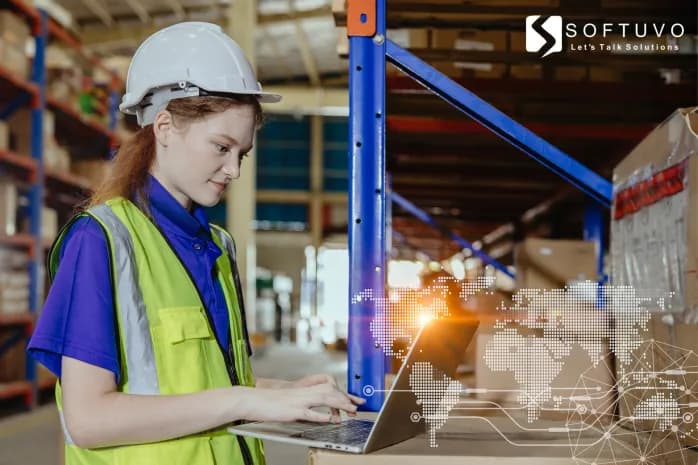
This blog is for logistics and supply chain businesses that know something isn't working the way it should but haven't quite figured out whether the answer is better processes, better people, or better software. (Spoiler: it's usually the software.)
Running a logistics business in the UK is not easy because of post-Brexit trade rules, rising costs, driver shortages, and customers who expect next-day delivery with live tracking. That pressure is real, and it's coming from every direction.
Most businesses are still managing these challenges with tools that were never built for them, like spreadsheets and generic platforms.
But things are changing; now, more UK businesses, from small to mid-sized freight companies, are moving towards custom logistics software development. This blog is about why that shift is happening and what it actually means in practice.
The UK logistics software market is expected to nearly double by 2035, indicating that the way UK businesses manage their supply chains is undergoing a fundamental shift, and those that move early are likely to pull ahead. Route optimization that actually works
The UK Logistics Industry Is Facing Some Very Specific Problems
Before we talk about software, it's important to understand what's actually going wrong, because the solution only makes sense once you see the real problem.
The Regulatory Reality UK Logistics Businesses Are Dealing With. Since 2021, goods moving between the UK and Europe require customs documentation, compliance checks, and, in many cases, physical inspections. According to McKinsey research, these new procedures have extended delivery timelines by around 30% on average for UK businesses; that delay is not just inconvenient, it also costs money, and, in competitive sectors, it can cost you a client.
Skilled workers are harder to find. Finding experienced drivers, warehouse managers, and operations staff with data skills has become a genuine challenge. Businesses simply can't hire their way out of every operational problem anymore.
Customer expectations keep rising. People ordering online expect live tracking, quick updates, and fast delivery, and the pressure falls directly on the logistics providers fulfilling those orders.
Any one of these problems would already put pressure on operations. Combined, they become difficult to manage with disconnected systems and manual processes.
Why Generic Software Stops Working After a Point
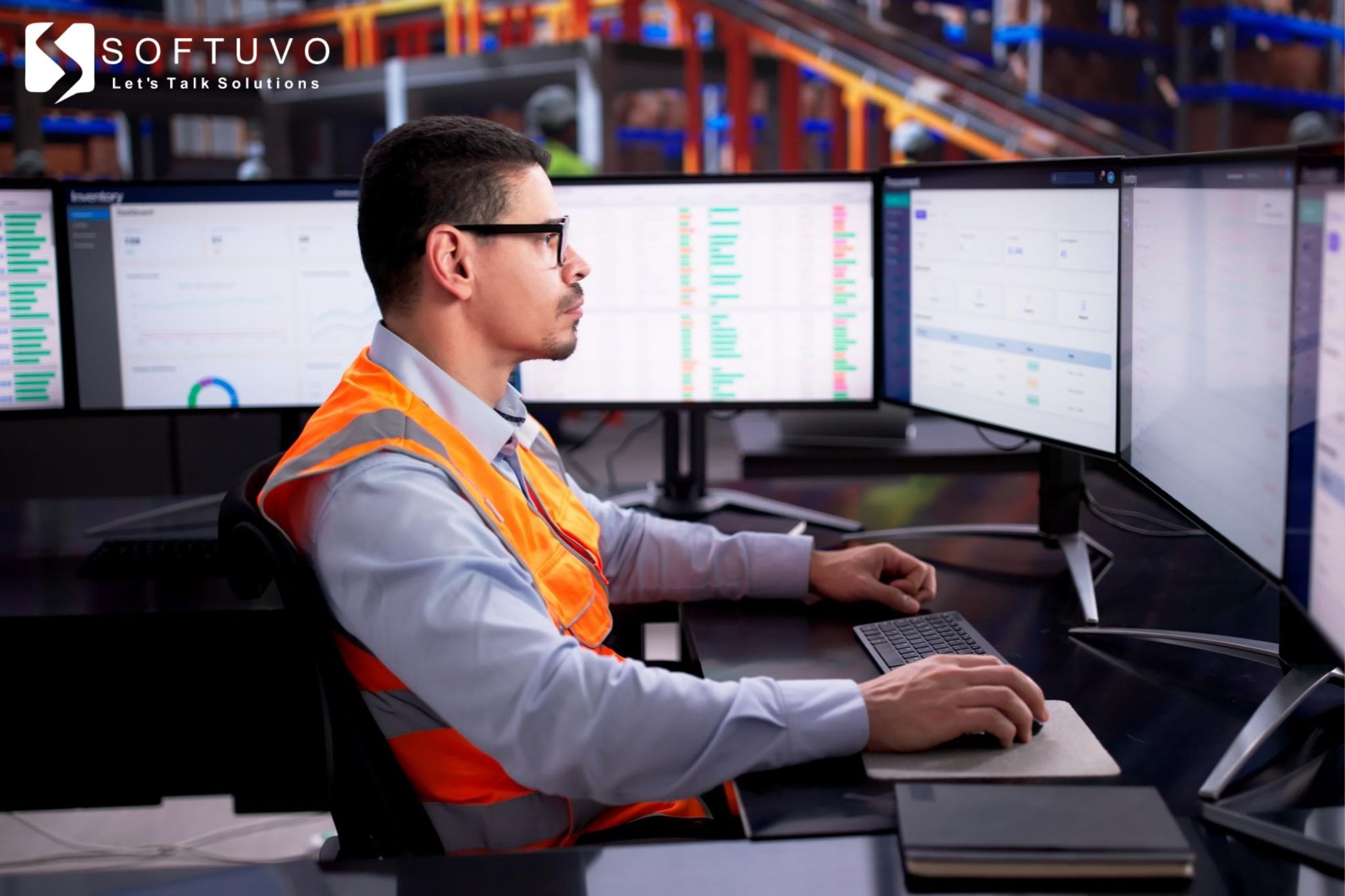
Off-the-shelf platforms make sense when you're starting. They're quick to set up, affordable, and cover all the basic needs, but as operations grow and get more complex, the cracks start to show.
Here are the signs most businesses recognize:
You're keeping a separate spreadsheet running alongside your main system because the software just doesn't capture the way your operation actually works.
Your platforms don't talk to each other. Your orders live in one place, fleet tracking in another, and warehouse stock somewhere else entirely, and nobody gets the full picture without manually pulling it all together.
Every time management needs a report, someone has to spend hours digging through multiple systems to build it. By the time it's ready, half the numbers are already out of date.
You're paying a monthly license for a tool packed with features your team has never touched, while the one thing you actually need isn't available.
Customs and compliance paperwork is still being handled manually. In today's regulatory environment, that's not just inefficient; it's a risk that grows bigger every single day.
A 2024 report found that UK businesses use an average of 13 different software tools, and nearly half of those licenses go unused. That is not an efficient setup; it is usually a sign that the software no longer fits the way the operation actually works.
So, What Is Custom Logistics Software, and What Does It Actually Do?
Custom logistics software is a system designed specifically to fit your business's unique workflow. Think of it this way: instead of changing how your team works to fit the software, the software is built to fit how your team already works.
It can cover everything your operation needs, from order management, route planning, live fleet tracking, warehouse stock control, driver communication, and customer delivery updates, to compliance documentation. The scope is decided by your actual needs, not by what comes in a standard package.
Softuvo's logistics software development approach begins with understanding the real-world operational needs of UK logistics companies, then building around them.
Where AI Fits In And Why It's More Useful Than It Sounds
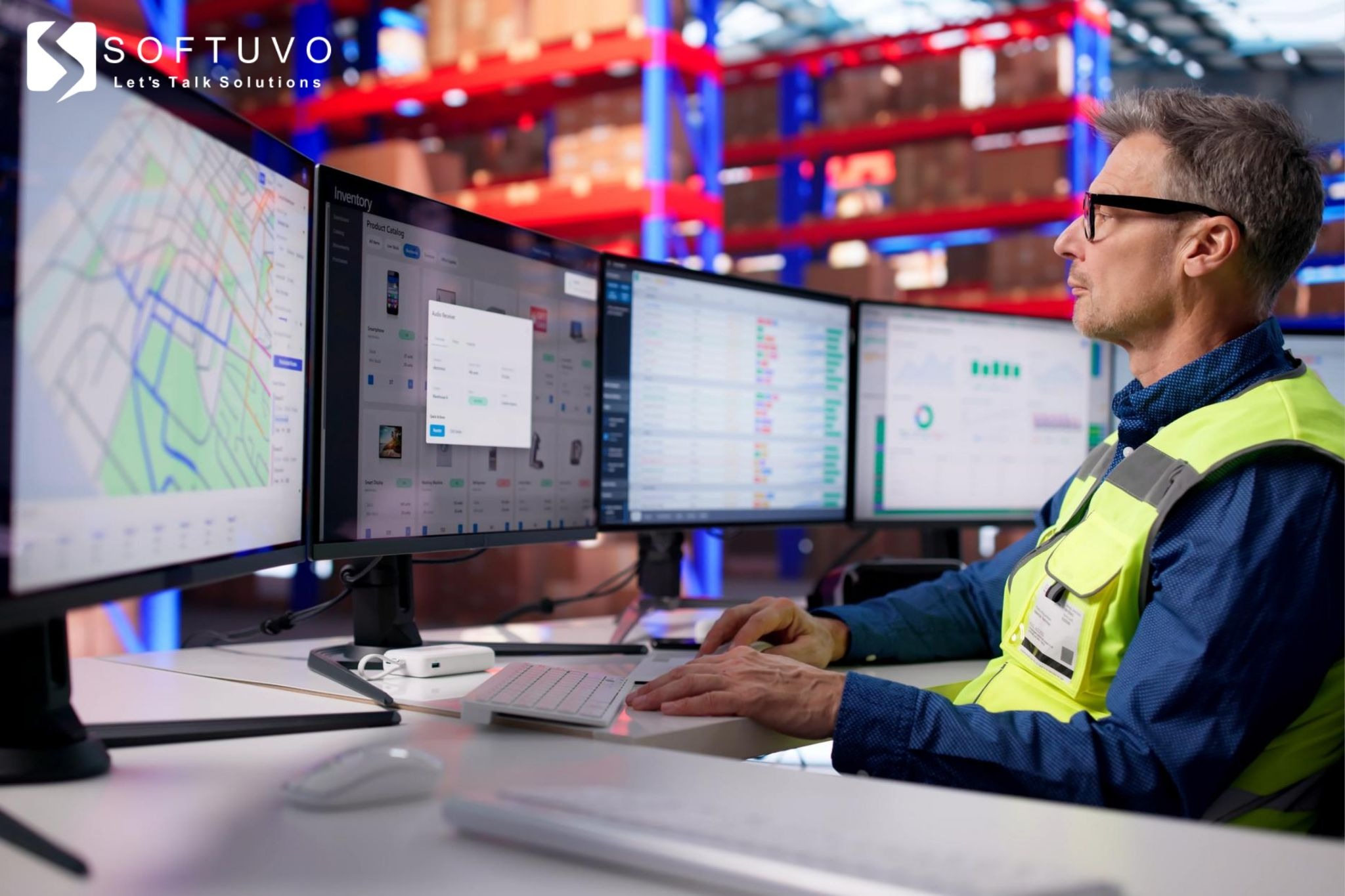
AI in logistics doesn't mean robots replacing people. In practical terms, it means your software gets smarter over time and helps your team make better decisions faster.
Here's what that actually looks like on the ground:
Spotting problems before they happen. Instead of finding out a delivery is going to be late after the fact, AI-powered systems can flag potential delays in advance based on real-time data so that your team gets time to act, not just react.
Smarter demand forecasting. Rather than guessing how much stock to order, AI analyzes patterns in your historical data, seasonal trends, order history, and market signals and gives your team an accurate picture of what's coming. Research shows AI-driven forecasting can cut excess inventory costs by up to 30%.
Smarter Route Optimization. AI calculates the most efficient delivery routes in real time. Fewer miles driven means lower costs and more deliveries completed on time.
Warehouse efficiency. Warehouse management solutions powered by AI track stock levels in real-time, optimize picking routes, and reduce the kind of human error that causes fulfillment delays.
Softuvo's predictive analytics capability is built to give UK logistics teams exactly this kind of forward visibility, the kind that used to require a dedicated analyst to produce manually.
A Real-World Example

Let's say a UK logistics business is currently using three separate platforms, one for orders, one for fleet tracking, and one for warehouse management. None of them connect properly.
Every morning, someone spends two hours pulling data from all three into a spreadsheet so the operations manager can see what's happening. By the time that report is ready, it's already out of date. Decisions get made based on yesterday's numbers.
With a well-built supply chain management software platform, all of that information lives in one place, and it updates in real time. Those two hours could go somewhere more productive.
Does the Investment Actually Pay Off?
Yes, custom software requires a higher upfront investment than a ready-made platform, but the returns come through:
Reduced manual work: fewer hours spent on tasks that the software should be doing
Fewer costly errors in fulfillment, compliance, and reporting
Better route and fuel efficiency directly cuts operational costs
Scalability: the system grows with the business without requiring a complete rebuild
Data ownership: your operational data stays yours, not locked inside a vendor's platform
Most businesses see measurable returns within 12 to 24 months. The businesses that delay, on the other hand, keep paying a hidden cost in wasted hours, missed opportunities, and systems that hold them back rather than push them forward.
The Bottom Line
UK logistics businesses are dealing with a genuinely complicated environment. The tools that worked five years ago are not built for what the industry is facing today.
Custom logistics software development is the practical answer, not because it's the newest thing, but because it's the most effective way to build a business that can handle complexity, scale with demand, and stay competitive as the industry keeps changing.
You don't have to rebuild everything at once. Most businesses start by solving one specific problem, a manual process that costs the team hours every week, a compliance gap that's becoming a risk, or two systems that desperately need to talk to each other. A good partner will help you identify where to begin and build from there, and that's exactly where the right development partner makes all the difference.
Ready to Take the Next Step?
If your logistics operation is running on disconnected tools, manual workarounds, or software that was never quite built for how you work, it's worth having a conversation.
Softuvo's AI Logistics Software Development Services are designed for UK businesses that are ready to build smarter.