How Secure Is Fintech Software Development for Financial Applications?
Financial applications are among the most attacked software on the planet. 87.5% of financial apps experienced an attack in January 2025, and 18.4% of fintech firms had a publicly reported breach.
The Stakes Have Never Been Higher
Fintech software sits at the intersection of two things that attackers value most: money and data. With billions of transactions flowing through mobile apps, open banking APIs, and digital wallets every single day, financial applications have become some of the highest-value targets in modern cybercrime.
Understanding both sides of that reality is essential for anyone building, investing in, or trusting a fintech product. This guide breaks down what security in fintech software development actually looks like today.
Why Fintech Is Uniquely Vulnerable
Unlike a social media platform or retail application, a fintech app has direct pathways into banking systems, payment rails, and identity verification infrastructure.
A breach here doesn’t just expose email addresses; it can expose account credentials, transaction histories, and even fund transfer access.
Many fintech apps also connect directly to banking systems. If data leaks from a fintech platform, attackers may gain access to credentials invisibly, sometimes without triggering banking alerts or internal monitoring systems.
For example, a poorly secured API in a digital wallet application could allow attackers to retrieve transaction histories or exploit weak authentication systems to access sensitive user data.
Why Fintech Security Matters More Than Ever
Fintech software development is growing rapidly. The global fintech market is currently valued at $420 billion and is expected to reach $1.15 trillion by 2032. More users than ever rely on mobile banking apps, digital wallets, and online payment platforms to manage their finances.
But growth attracts attackers.
Financial applications remain among the most targeted software systems in the world, and when a breach occurs, it’s not just data that gets exposed; it’s real people’s savings, identities, and financial activity.
The good news is that the fintech industry has made significant progress. However, cyber threats have also become smarter and more sophisticated.
So the honest answer to “how secure is fintech software development?” remains the same: better than ever, but still under serious pressure.
The Real Threats Fintech Apps Face Today

To understand security, you first need to understand what you’re protecting against. Here are some of the biggest threats in fintech cybersecurity today:
Banking Malware
Malicious software designed to steal financial credentials and session data. Banking malware often operates silently in the background for weeks before detection.
AI-Powered Deepfakes
AI-generated video and audio are increasingly being used to bypass facial recognition and voice authentication systems.
Deepfake attacks on banks surged by 1,530% in the Asia-Pacific region between 2023 and 2024.
API Vulnerabilities
Open banking APIs connect multiple systems. A poorly secured API can become an open door for attackers trying to access sensitive financial data.
Third-Party Risk
Payment processors, KYC tools, and analytics providers all connect to fintech applications. If those systems are not secure, your application becomes vulnerable too.
Phishing Attacks
Stolen financial data is frequently used in targeted phishing attacks designed to trick users into revealing even more information or access credentials.
Outdated Software
Old libraries and software components often contain publicly known vulnerabilities. Attackers use automated tools to discover these weaknesses before development teams even notice them.
What Good Fintech App Development Security Looks Like
When done properly, fintech app development integrates security from the very beginning rather than treating it as an add-on later in the process. Here’s what strong fintech software development security looks like in practice:
Multi-Factor Authentication (MFA)
MFA requires users to verify their identity in multiple ways.
Research shows MFA blocks 99.9% of automated attacks. Modern fintech apps also use fingerprint authentication and facial recognition with systems that verify a real person is using the app to prevent fake verification attempts.
Secure API Design
Every API connection inside a fintech application requires proper authentication, controls that limit unusual or excessive requests, and access controls. A well-designed API only exposes the minimum amount of information necessary for functionality.
AI Fraud Detection
AI systems monitor transaction behaviour in real time and flag suspicious activity instantly. These systems can spot unusual behaviour that older security systems often fail to catch.
For example, if a user suddenly initiates multiple high-value transactions from a new location within minutes, AI fraud systems can flag the activity instantly.
Built-In Security During Development
Security checks are integrated directly into the software development process instead of being added at the end. Code is automatically scanned for vulnerabilities every time changes are made.
Continuous Monitoring
24/7 monitoring systems help teams detect threats quickly. The faster suspicious activity is identified, the lower the potential damage becomes.
Security Testing
Regular penetration testing, security scans, code reviews, and infrastructure audits help identify weaknesses before attackers can exploit them.
Payment Gateway Security: A Closer Look
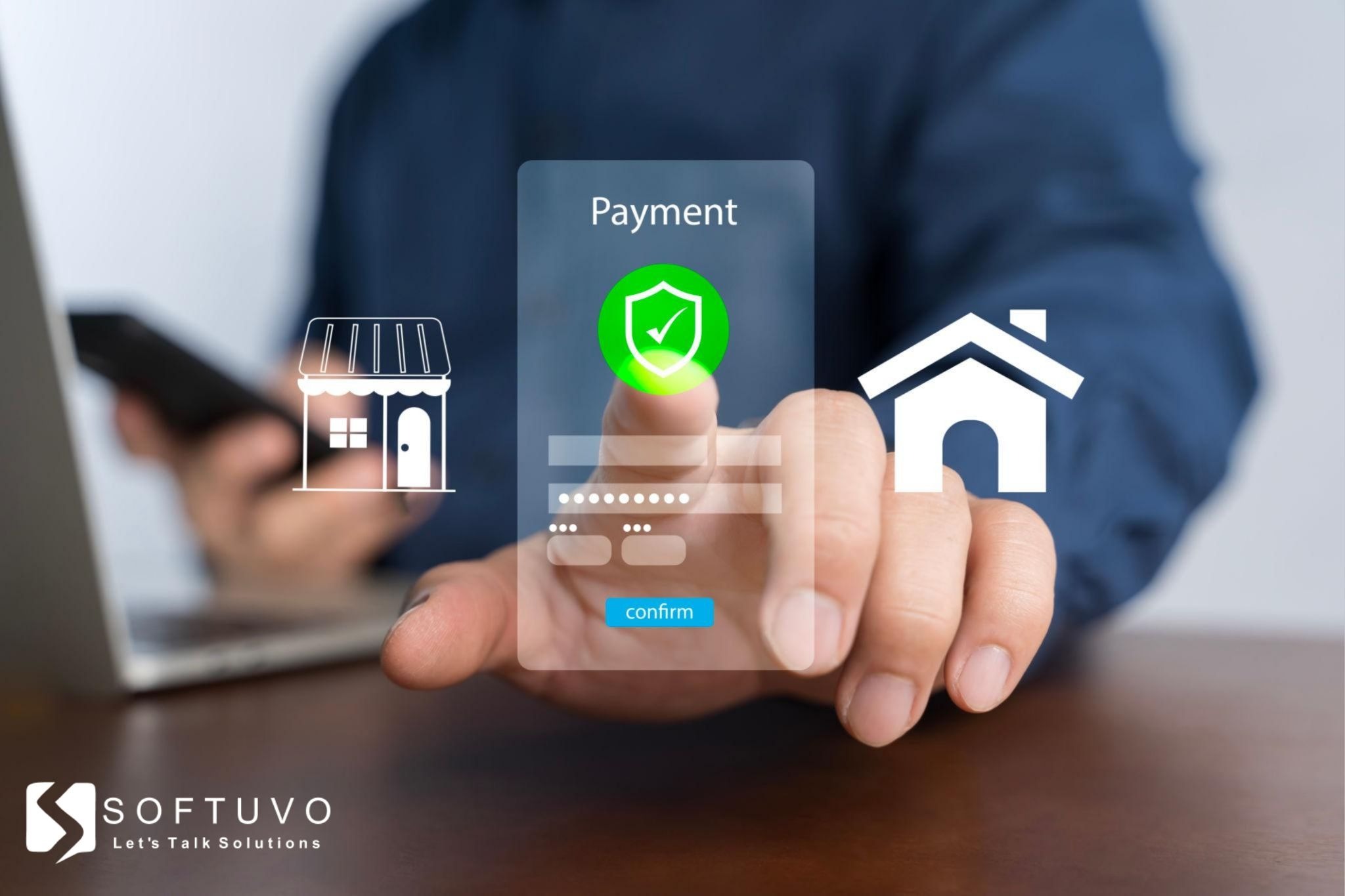
Payment gateway security is one of the most important areas of any financial application. Every time a user taps “Pay,” a complex chain of systems processes that transaction. Each layer in that chain must remain protected.
Here’s what strong payment gateway security involves:
Tokenisation
Instead of storing actual card numbers, systems replace them with randomly generated tokens. Even if attackers intercept the token, it becomes useless without the matching encryption key.
End-to-End Encryption
Payment data is encrypted from the moment the user enters it until it reaches the bank or payment processor. No intermediary system can read the information during transmission.
PCI DSS Compliance
Any platform handling card payments must comply with PCI DSS standards. These standards define the minimum global security requirements for payment infrastructure.
Fraud Monitoring
Real-time fraud detection systems identify suspicious behaviour such as:
Unusually large transactions
Transactions from unexpected locations
Rapid repeated payment attempts
Behaviour that doesn’t match normal user activity
At Softuvo, payment gateway security is never treated as an afterthought. We integrate security into the architecture from day one because fixing security problems later always creates greater cost and risk.
Encryption in Fintech Applications
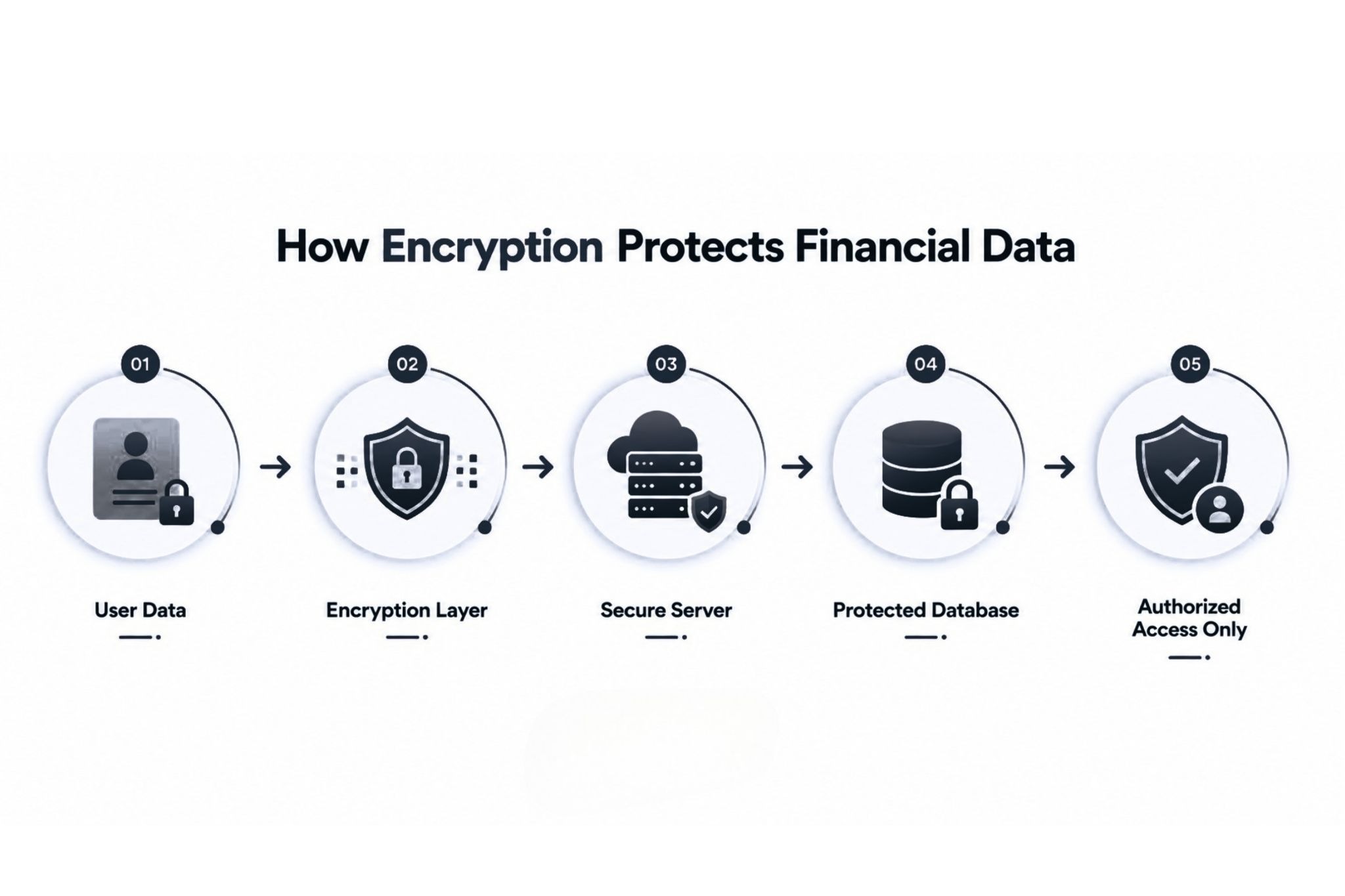
Encryption in fintech applications is a core part of modern fintech cybersecurity. Encryption converts readable information into secure coded data that only authorized systems can decode. It protects data across multiple layers of a financial application.
AES-256 (Data at Rest)
AES-256 is considered the gold standard for protecting stored data, including:
Transaction records
Account details
Customer information
Financial histories
It’s the same encryption standard used by military organizations around the world.
TLS 1.3 (Data in Transit)
TLS 1.3 encrypts data while it travels between applications and servers. This prevents attackers from stealing or changing data while it moves between systems.
Key Management
Encryption is only as strong as the key protecting it. Secure systems help store and update encryption keys safely so they cannot be stolen or misused.
Tokenization for Payments
Tokenization replaces sensitive card details with random tokens. Even if transaction data is intercepted, the real card information remains protected. Encryption in fintech applications is not optional. In many regions, it is legally required and considered a basic expectation of users.
Any fintech software development project that ignores proper encryption creates serious legal, financial, and reputational risk.
Compliance: The Rules You Can’t Ignore
Managing regulatory compliance is one of the biggest challenges in fintech software development.
Requirements vary depending on the region, industry, and services provided, but several frameworks are widely recognised across the financial sector:
PCI DSS: Card payment security
GDPR: EU data protection
PSD2: Open banking regulations in Europe
SOC 2: Secure data handling controls
HIPAA: Health-linked financial data
ISO 27001: Information security management
Failing to meet these standards doesn’t just create financial risk; it can result in regulatory penalties or even force an application to shut down entirely.
The best fintech teams do not treat compliance as a checklist to complete at the end. They build their systems around compliance requirements from the very beginning.
Remember: compliance is not a one-time event. Regulations evolve constantly, and your security practices must evolve in tandem with them throughout the entire product lifecycle.
Where Fintech Security Still Falls Short
Despite major improvements in fintech cybersecurity, some security gaps continue causing serious damage across the industry.
Third-Party Integrations
Third-party services often become the weakest link in security. Payment processors, identity verification systems, and analytics platforms all connect directly to fintech applications. If any connected provider has weak security, your app becomes vulnerable as well.
Legacy Banking Systems
Many fintech products still connect to older banking infrastructure built decades ago. The points where modern systems connect with older banking technology are often where security gaps appear, requiring extra security attention and monitoring.
Treating Security as an Afterthought
This remains one of the most common and expensive mistakes in fintech app development. Some startups prioritize rapid feature releases and postpone security until later stages. Unfortunately, delayed security fixes become dramatically more expensive after deployment.
NIST research shows that fixing a security flaw early in development can cost up to 30 times less than fixing it after launch.
The Shift-Left Principle
Finding a security issue during development may take hours to fix. Finding the same issue after a breach can take months of recovery, legal handling, and reputational rebuilding.
That’s why security should be part of fintech software development from the very beginning.
Conclusion
Fintech software development has evolved significantly. The tools are stronger, the practices are more mature, and the industry now understands that security is not optional. But cyber threats have evolved just as quickly, and in some cases, even faster.
The data tells a clear story. When 87.5% of monitored financial apps face attacks in a single month, cyber threats are no longer occasional events; they are the normal operating environment for financial software in 2025.
Building a secure financial application means preparing for a world where cyberattacks are expected, not rare.
“In fintech, trust is the product. Users don’t just expect your app to work; they expect it to protect their money, identity, and financial future. Security is how you earn that trust, and it’s how you keep it.”
At Softuvo, we believe secure fintech software development is not just about protecting systems; it’s about building long-term user trust through reliable and secure digital experiences.