How AI Is Transforming Supply Chain Optimization
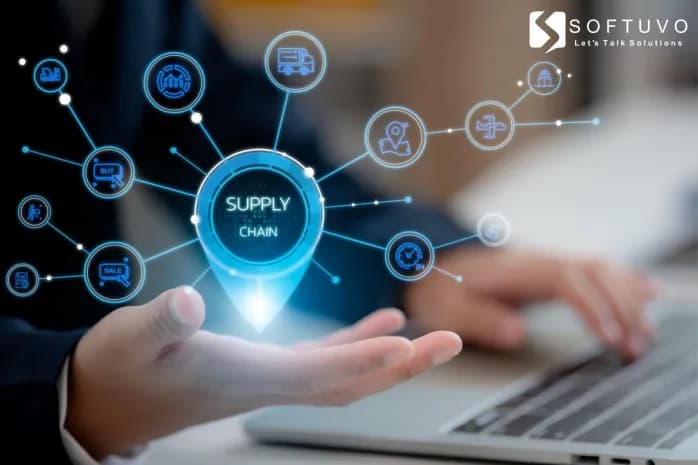
Supply chain optimization is changing fast, and here’s what AI is actually doing. Imagine:
A delayed shipment.
An out-of-stock product.
A warehouse full of items no one is buying.
These problems are everyday realities in supply chain management, and the truth is that most of them don’t happen because companies lack tools. They happen because decisions are made too late.
AI is now transforming entire supply chain management. Today, supply chain optimization is about making the right decisions before problems even show up.
How Supply Chains Got Here
To understand the transformation, we must examine how supply chains have evolved.
The Era of Deterministic Planning (Pre-2000)
Early supply chains relied heavily on ERP systems and fixed rules. These systems operated on historical data and predefined logic, assuming that future patterns would resemble the past.
This worked in stable times, but failed when anything unexpected happened.
The Optimization Era (2000–2015)
As computational capabilities improved, companies began adopting mathematical optimization techniques such as linear programming and heuristics.
The goal shifted toward minimizing costs across transportation, warehousing, and inventory. However, these systems still depended on structured data and could not adapt dynamically to uncertainty.
The Machine Learning Layer (2015–2020)
The introduction of machine learning marked a turning point. Systems began learning from data instead of just following rules. Forecasting improved, and risks could be spotted earlier.
Yet, decision-making still required human intervention in most cases.
What’s Changing Now (2020–Present)
The disruptions caused by the COVID-19 pandemic exposed the limitations of traditional systems and accelerated the adoption of AI.
Modern supply chains are now evolving into autonomous, self-correcting systems that can:
Predict disruptions before they occur
Continuously re-optimize decisions in real time
Recommend or execute actions without human delay
What was once a linear pipeline has become a living, adaptive network.
How AI Works in Supply Chains
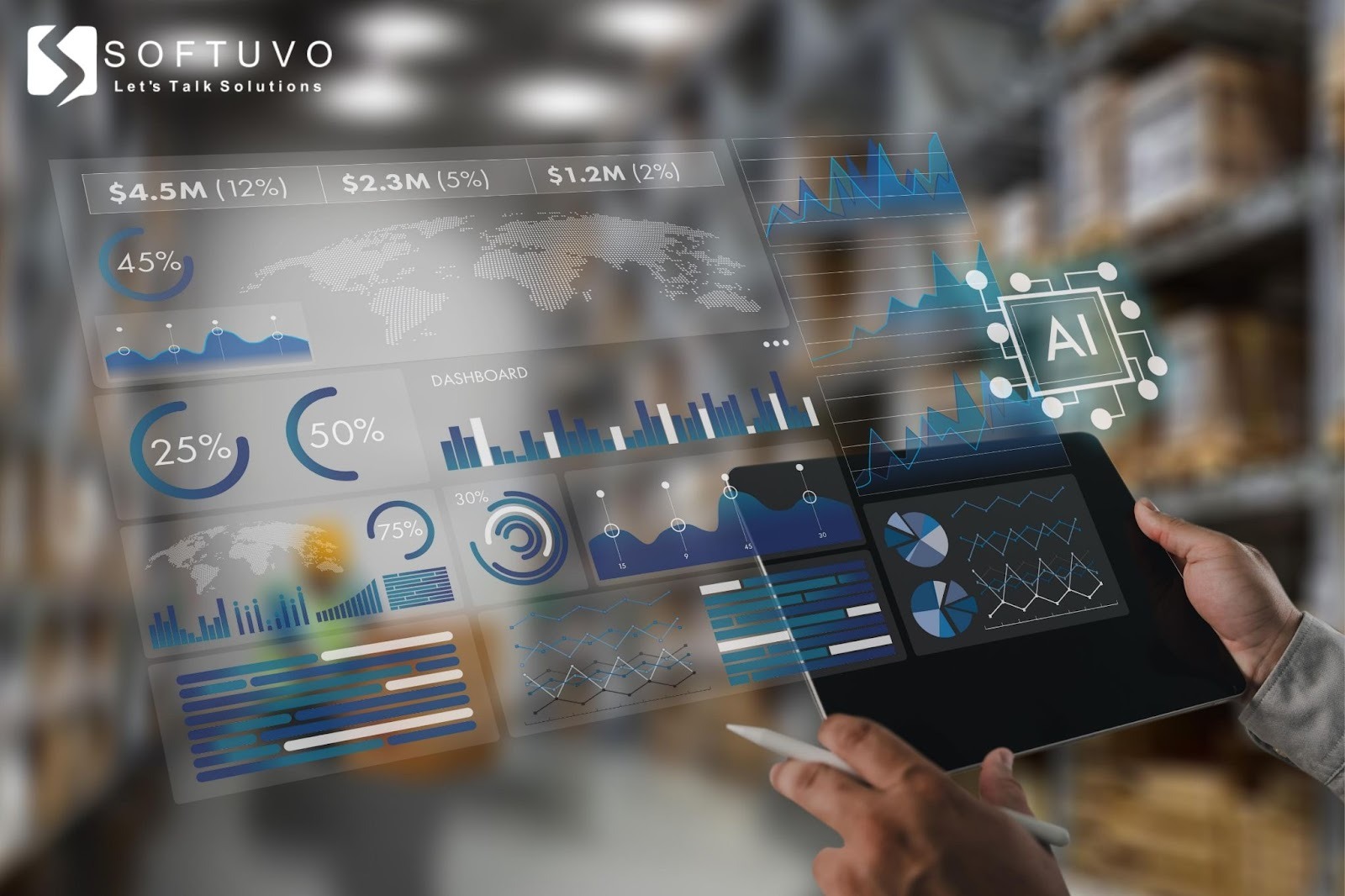
Modern supply chain management is powered by a layered architecture that integrates data, intelligence, and execution.
Data Layer: The Foundation
AI systems rely on massive volumes of data from multiple sources:
Enterprise systems (orders, invoices, inventory)
IoT sensors (location, temperature, movement)
External signals (weather, economic trends, geopolitical events)
Without high-quality data, even the most advanced AI models fail.
Prediction Layer: Turning Data into Insight
Machine learning models process this data to generate predictions such as:
Demand forecasts based on real-time signals
Estimated delivery times with probability of delays
Supplier risk scores
This layer transforms uncertainty into measurable probabilities.
Optimization Layer: Where Decisions Are Made
Predictions alone are not enough. AI combines them with constraints, cost, capacity, and service levels to determine the best possible actions.
Technologies like reinforcement learning and advanced optimization algorithms are used to:
Allocate inventory across networks
Optimize transportation routes
Balance trade-offs between cost and speed
Execution Layer: From Insight to Action
Decisions are implemented through operational systems such as:
Warehouse management systems
Transportation platforms
Procurement tools
In advanced setups, execution can happen automatically, reducing response time significantly.
Feedback Loop: The Self-Improving Engine
Perhaps the most powerful aspect of AI-driven supply chains is the feedback loop.
Systems continuously learn from outcomes, what worked, and what failed, and refine future decisions. This creates a cycle of continuous improvement that traditional systems could never achieve.
Real-World Impact
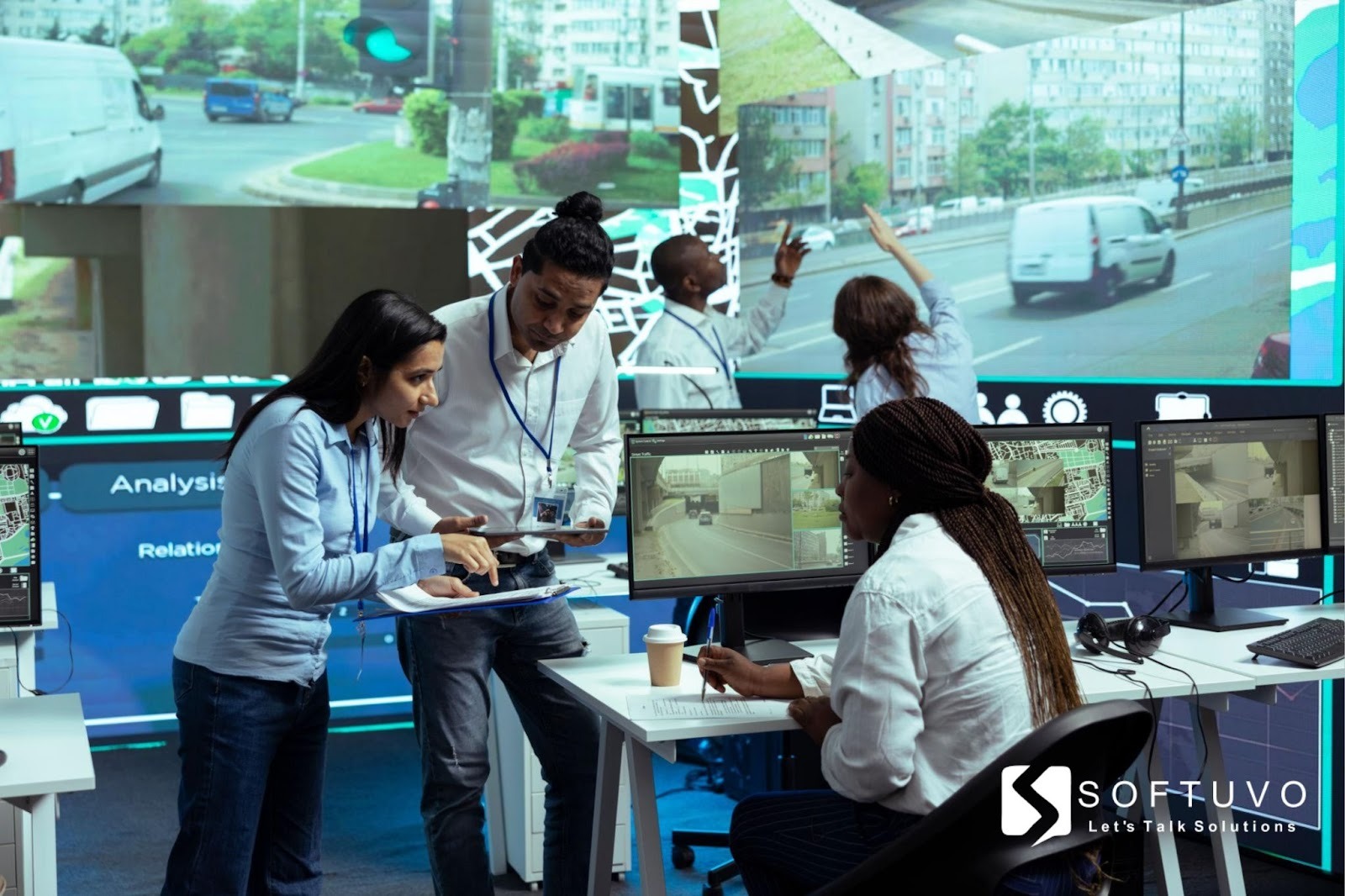
The true value of AI becomes clear when we look at how leading companies are using it in practice.
Amazon: Anticipatory Logistics
Amazon has explored predictive shipping models that analyze customer behavior to anticipate purchases before they are made.
By positioning products closer to expected demand, the company reduces delivery times and enhances customer experience.
Zara: Real-Time Production Cycles
Unlike traditional fashion brands that rely on seasonal collections, Zara uses real-time sales and customer feedback to adjust production continuously.
This allows the company to respond to trends within days, not months, significantly reducing unsold inventory.
UPS: Route Optimization at Scale
UPS developed the ORION system, which uses advanced algorithms to optimize delivery routes.
Even small improvements in routing translate into massive savings, reducing millions of miles traveled and cutting fuel consumption significantly.
Tesla: Supply Chain Meets Software Engineering
Tesla has taken a unique approach by integrating supply chain decisions with product engineering.
During semiconductor shortages, the company adapted by rewriting software to support alternative chips, demonstrating how deeply supply chains are now intertwined with technology.
Advanced Concepts Driving the Future
Beyond current implementations, several advanced concepts are shaping the next generation of supply chain management.
Digital Twins
A digital twin is a virtual replica of the entire supply chain, allowing companies to simulate disruptions, test strategies, and evaluate outcomes before implementing changes in the real world.
Reinforcement Learning
Unlike traditional models, reinforcement learning systems improve through trial and error, making them highly effective for dynamic environments like logistics and warehouse operations.
Multi-Echelon Inventory Optimization
This approach optimizes inventory across all levels of the supply chain, from central warehouses to local stores, ensuring efficiency across the entire network rather than isolated nodes.
Control Towers
AI-powered control towers act as centralized command centers, providing real-time visibility, predictive insights, and automated decision-making capabilities.
The Bigger Shift: Decision Intelligence as a Competitive Advantage
The companies leading today are not necessarily those with the largest networks but those with the most intelligent systems: systems that can predict, adapt, and act faster than competitors.
Future of Supply Chain
As AI continues to evolve, supply chains will become:
More autonomous, with minimal human intervention
More personalized, enabling mass customization
More sustainable, optimizing for environmental impact alongside cost
At the same time, the boundary between supply chain management and software engineering will continue to blur.
How Softuvo Helps Businesses Improve Supply Chain Optimization
Softuvo works as a reliable software development company to improve supply chain optimization by building custom solutions that match their exact needs. Instead of using generic tools, businesses get systems designed around their processes, data, and goals. At Softuvo, we:
Build custom systems
Use AI for better decision-making
Help companies scale their operations
Final Thoughts
AI is not merely an upgrade to existing supply chains; it is a redefinition of how they function. From rigid, rule-based systems to adaptive, self-learning networks, the shift is profound.
And at its core lies a simple truth: The future of the supply chain belongs to those who can turn data into decisions and decisions into action faster than anyone else.
Supply chain optimization
Make your supply chain visible, predictable and cheaper to run
From demand forecasting to warehouse and carrier integration, we build the systems that take manual decisions out of your supply chain.
Prefer email? Write to [email protected] or use the contact form.