
Healthcare’s Digital Evolution
Technology-driven trends are reshaping patient care, clinical efficiency, and the future of global health systems.

The Shifts Transforming Modern Healthcare
Healthcare continues to evolve rapidly as providers adopt digital systems, enhance patient experiences, and meet regulatory demands.
Key Trends Influencing Healthcare Technology

Integrated Digital Patient Experiences
Modern healthcare is moving toward seamless, connected patient journeys across apps, portals, telehealth, and in-hospital systems.

AI & Intelligent Healthcare Automation
Clinical workflows, diagnostics support, and administrative tasks are increasingly integrating AI. Secure and compliant AI will shape the next era of healthcare delivery.

Cloud-Driven Healthcare Modernization
Hospitals are adopting cloud infrastructure for faster operations, storage, and interoperable data exchange.

Expansion of Virtual & Remote Care
Remote monitoring has become foundational rather than optional. Hybrid care models will drive future patient engagement and reduce clinical load.

Compliance-Led Digital Transformation
Rising cyber threats and strict regulations make compliance with HIPAA, GDPR, ISO 27001, and regional data laws essential for modern healthcare platforms
Healthcare Compliance as a Digital Advantage
Healthcare innovation must progress alongside security and compliance to ensure trust, safety, and long-term operational reliability.
HIPAA-Aligned Architectures
Build systems that adhere to HIPAA security, privacy, and integrity requirements.
GDPR-Ready Data Handling
Ensure compliant data collection, storage, processing, and user protection.
Audit-Friendly System Design
Enable transparency and simplified auditing across healthcare workflows.
Secure EHR/EMR Integrations
Connect systems with compliant, secure, and scalable health data exchange.
Multi-Layer Data Protection
Protect sensitive health information with encryption, IAM, and governance.
Regulatory-Ready Cloud Environments
Deploy cloud solutions designed for industry-specific compliance needs.
Insights & Strategic Perspectives
This section highlights high-level insights that reflect Softuvo’s research-driven understanding of digital evolution in healthcare.
How Supply Chain Automation Software Is Revolutionizing Canada's Manufacturing and Logistics Industries
For years, Canadian manufacturers have relied on experience, spreadsheets, and countless phone calls to keep production moving. That approach worked when supply chains were shorter and customer expectations were more predictable. Today, it's a different story.
A delayed shipment from Asia can halt production in Ontario. A warehouse in Alberta can run out of critical inventory overnight because demand suddenly spikes. At the same time, customers expect real-time delivery updates and faster order fulfillment than ever before.
These challenges aren't isolated incidents, they've become part of everyday operations for manufacturers and logistics providers across Canada.
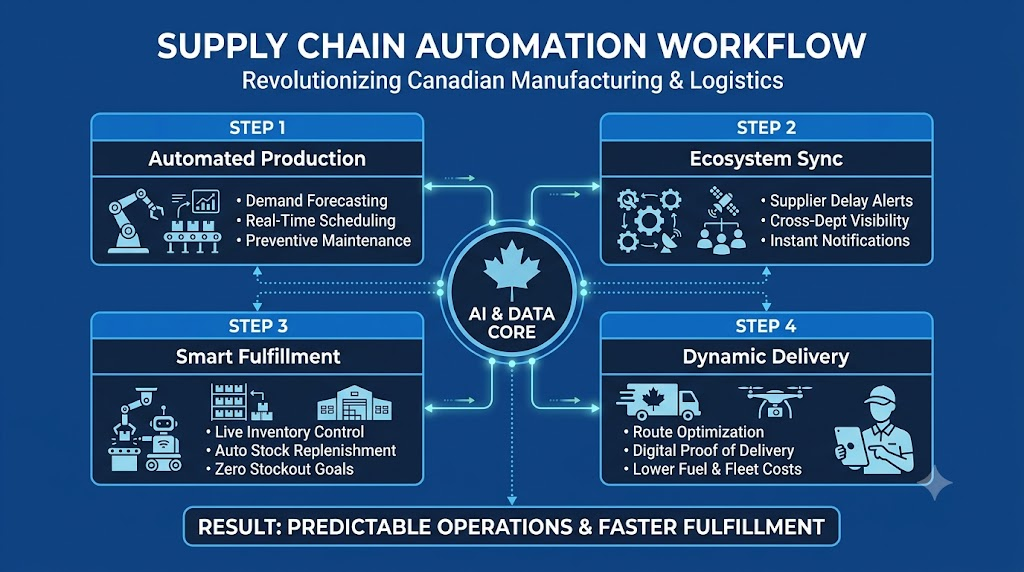
Instead of hiring more people to manage growing complexity, many businesses are investing in Supply Chain Automation Software. The goal isn't simply to automate repetitive tasks. It's about creating a connected supply chain where inventory, suppliers, warehouses, transportation, and production teams all work from the same real-time information.
Companies that embrace automation are finding they can respond faster to disruptions, make smarter purchasing decisions, and operate with greater confidence, even in an unpredictable market.
Why Manual Supply Chains Are Reaching Their Limits
Say a Toronto manufacturer is waiting on a shipment, and the supplier emails to say it's delayed by three days. Now production plans, warehouse schedules, and delivery dates all need to change.
Multiply that across hundreds of suppliers and thousands of orders a month, and you get the problem: without good Supply Chain Management Software, teams spend more time searching for information than actually solving problems. They're stuck checking emails, spreadsheets, and different systems just to figure out what's going on and by the time they spot an issue, it's already causing delays.
Automation fixes this. Smart software keeps track of inventory, suppliers, shipping, and demand on its own, and warns people before problems get bad, not after.
That's why more Canadian manufacturers are moving away from manual tracking and toward smarter systems.
See What's Happening Before It Becomes a Problem
One of the biggest challenges for manufacturers isn't the lack of data, it's the lack of visibility.
Imagine a manufacturer in Ontario that receives hundreds of raw material deliveries every week. If one shipment is delayed, production planners need to know immediately. Warehouse teams need updated receiving schedules, procurement teams must communicate with suppliers, and sales teams should be aware of potential delivery delays.
Without connected systems, each department discovers the issue separately.
With Supply Chain Automation Software, everyone works from the same live information. Inventory levels update automatically, supplier delays trigger alerts, and production schedules can be adjusted before downtime occurs.
Instead of asking, "What happened?" businesses begin asking, "What should we do next?"
That difference has a direct impact on customer satisfaction, operational efficiency, and profitability.
From Production Delays to Predictable Operations
Canadian manufacturers are under constant pressure to reduce costs, meet customer expectations, and keep production running smoothly. Supply chain automation helps simplify these everyday challenges.
Smarter Production Planning
Instead of relying on guesswork, businesses can use real-time data to forecast demand, plan production more accurately, and avoid unexpected shortages. This leads to better resource utilization and fewer disruptions.
Better Inventory Control
Keeping the right amount of inventory is easier with Supply Chain Management Software. Stock levels are updated automatically, helping businesses avoid overstocking, prevent stockouts, and improve warehouse efficiency.
Stronger Supplier Coordination
Managing suppliers becomes much simpler when purchase orders, shipment tracking, and delivery updates are automated. Teams receive instant notifications about delays, making it easier to respond quickly and keep production on schedule.
Together, these improvements help Canadian manufacturers build a more efficient, reliable, and resilient supply chain.
Why Modern Logistics Needs More Than Route Planning
Managing deliveries today involves much more than moving goods from one place to another. From route planning and driver schedules to customer updates and delivery timelines, manual coordination can quickly slow operations as shipment volumes increase.
With Logistics Management Software, businesses can simplify the entire process through real-time visibility and automation. This helps logistics teams:
Optimize delivery routes.
Track shipments in real time.
Manage drivers and fleets efficiently.
Send automatic customer updates.
Capture digital proof of delivery.
Reduce fuel costs and improve fleet utilization.
The result is a more efficient logistics operation that delivers faster, reduces manual effort, and keeps customers informed every step of the way.
Why the Smartest Manufacturers Are Automating Their Supply Chains
Canadian manufacturers are under pressure from every direction, rising labor costs, unpredictable supply chain disruptions, and customers who expect faster, more reliable service than ever. Add in global competition, complex supplier networks, and constantly shifting inventory needs, and it's easy to see why things get complicated fast.
When processes are still manual, the cracks start to show: shipments get delayed, warehouses end up overstocked or running short, and small human errors add up to real operational costs.
Modern Supply Chain Management Software solves this by bringing every part of the supply chain, suppliers, inventory, shipping, demand onto one connected, intelligent platform, so nothing falls through the cracks.
Your Supply Chain Already Has the Data. AI Knows How to Use It
Most manufacturers already collect data from suppliers, warehouses, inventory systems, and deliveries. But data alone doesn't improve operations.
AI connects those pieces, uncovers patterns, and highlights what needs attention first. Instead of spending hours analyzing reports, teams receive insights that help them make faster, more confident decisions.
For Canadian manufacturers, this means a supply chain that doesn't just react to change, it learns from it and adapts continuously.
Automation Works Best When Every Department Is Connected
You know that moment when one small change turns into a whole chain of updates? A purchase order shifts, and suddenly inventory needs adjusting, finance has to approve it, and production is scrambling to keep up. Same information, just passed around system to system.
This is the problem Enterprise Automation Canada actually solves. Instead of teams updating each other manually, the systems just talk to each other, keeping procurement, inventory, finance, production, and logistics in sync automatically.
No more chasing updates. No more "wait, is this right?" People just trust the data and keep moving.
It's not really about cutting manual work. It's about removing the friction that slows everyone down, so the business runs like one team instead of five departments guessing at what the others are doing.
Every Delay Starts Somewhere. Find It Before It Finds You
The way manufacturers operate has changed dramatically. Customer demand shifts quickly, supply chains are more interconnected, and even a minor disruption can impact production, inventory, and delivery commitments. Managing these challenges with spreadsheets and disconnected systems is no longer enough.
At Softuvo, we've seen how the right technology transforms manufacturing operations. Our Supply Chain Management Software is designed to give businesses complete visibility across procurement, inventory, production, warehousing, and logistics, all from a single, intelligent platform.
Looking to build a smarter, more connected supply chain? Partner with Softuvo to automate your operations, improve efficiency, and create a supply chain that's ready for the future. Let's discuss how our solutions can support your manufacturing business in Canada.
FAQs
1. What is Supply Chain Automation Software?
Supply Chain Automation Software automates inventory, orders, warehouses, and shipping to reduce manual work, improve accuracy, and increase efficiency.
2. How does Supply Chain Management Software help businesses?
Supply Chain Management Software gives real-time visibility into inventory, suppliers, and orders, helping businesses make faster and smarter decisions.
3. What are the benefits of Logistics Management Software?
Logistics Management Software improves route planning, shipment tracking, delivery speed, and transportation efficiency while reducing costs.
4. Why is Supply Chain Optimization important?
Supply Chain Optimization helps businesses reduce delays, lower costs, improve inventory management, and keep operations running smoothly.
5. Why choose Softuvo for Enterprise Automation Canada?
Softuvo builds custom Enterprise Automation Canada solutions that automate workflows, improve productivity, and support business growth.
Beyond Chatbots: The Real Business Potential of Generative AI Integration Solutions
TL;DR
Chatbots solved a narrow interface problem. Generative AI integration embeds summarization, retrieval, drafting, and decision support into the CRM, ERP, operations tools, and custom apps people already use. Softuvo's services for that work are on the generative AI integration page.
If your AI strategy still begins and ends with a chatbot, you're only using a fraction of what the technology can offer.
Many businesses rushed to deploy AI-powered chatbots to improve customer support. While they reduced response times, they didn't solve the bigger operational challenges, employees still spent hours searching for information, sales teams manually updated CRMs, finance departments processed invoices by hand, and managers waited days for reports.
This is where Generative AI Integration creates real business value. Instead of adding another standalone AI tool, businesses are embedding AI directly into the software their teams already use every day. The result isn't just better conversations with customers, it's faster decisions, smoother operations, and more productive teams.
In this blog, we'll look beyond chatbots and explore how organizations are using AI to transform everyday business processes.
Chatbots Solved One Problem, Businesses Have Hundreds More
When chatbots became popular, the focus was customer service. They answered FAQs, booked appointments, and handled basic support requests.
But inside most organizations, the real bottlenecks were happening elsewhere.
Think about a typical workday:
A salesperson searches through hundreds of emails before responding to a client.
HR manually reviews dozens of resumes for a single position.
Finance teams spend hours verifying invoices.
Marketing rewrites similar campaign content for different audiences.
Project managers gather updates from multiple teams before creating reports.
None of these challenges are solved by a chatbot.
This is why companies are now investing in Generative AI Integration, to bring AI into the workflows employees rely on every day instead of limiting it to customer conversations.
AI Works Best When Employees Don't Notice It's There
One of the biggest misconceptions about AI is that it needs a separate interface.
In reality, the most effective AI experiences are almost invisible.
Imagine a customer sends an email requesting a pricing update.
Without AI, a sales representative may:
Search previous conversations
Open the CRM
Review pricing documents
Draft a response
Update customer records
Now imagine the same process after AI integration services connect your CRM, email platform, and document system.
Before the salesperson even opens the email, AI has already:
Summarized the customer's history
Suggested the best pricing option
Drafted a personalized response
Identified upsell opportunities
Prepared the CRM update
The employee still makes the final decision, but the repetitive work disappears.
That's where AI starts creating measurable business value.
Generative AI Is Becoming an Operational Layer
Many companies think of AI as another software product.
Forward-thinking organizations treat it differently.
They're building AI as an operational layer that sits across existing business systems.
Rather than replacing your ERP, CRM, HR software, or internal tools, AI connects them and makes them work together more intelligently.
For example, when a customer places a large order, AI can automatically:
Notify inventory teams
Predict delivery timelines
Alert procurement if stock is low
Generate internal documentation
Create personalized customer updates
No one has to manually coordinate every step.
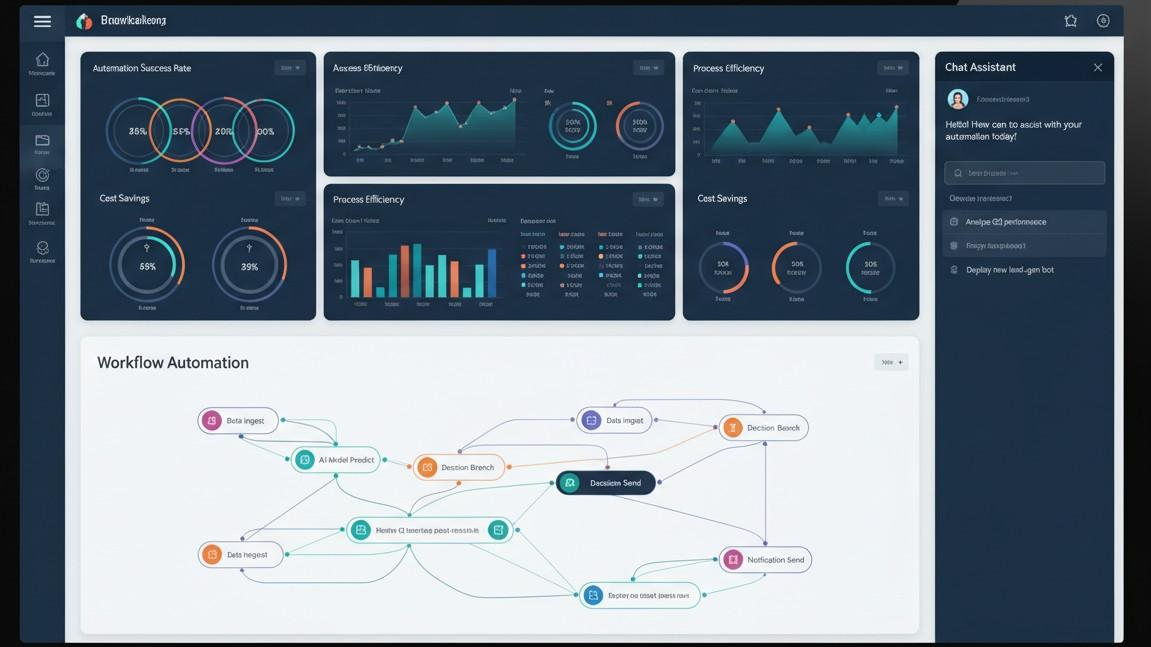
AI Workflow Automation Is Redefining Productivity
Businesses often measure productivity by how much work employees complete.
A better question is:
How much unnecessary work are employees still doing?
This is where AI workflow automation changes the conversation.
Instead of asking employees to become faster, AI removes work that never needed to be manual in the first place.
For example, AI can:
Turn meeting recordings into action items
Convert contracts into structured data
Generate weekly performance reports
Organize project documentation
Categorize support tickets
Prepare executive summaries from lengthy documents
Each task may save only a few minutes.
Across hundreds of employees, those minutes become thousands of productive hours every year.
Enterprise AI Solutions Help Businesses Make Better Decisions
Most businesses already have a lot of data. The problem isn't collecting it, it's making sense of it quickly.
Sales reports, financial data, and customer feedback are often spread across different systems. By the time everything is put together, the chance to act may already be gone.
This is where Enterprise AI solutions make a difference. Instead of just showing reports, AI helps businesses understand what's happening and why. It can answer questions like:
Which customers are likely to leave?
Why did sales drop in a certain area?
Which products need the most customer support?
What business issues should be solved first?
Instead of only showing data, AI turns it into clear insights that help businesses make faster and better decisions.
Why the Future Belongs to Connected AI
The companies gaining the greatest advantage from AI aren't necessarily using the most advanced models.
They're the ones connecting AI across departments, systems, and workflows.
When AI becomes part of everyday operations instead of a standalone tool, businesses experience:
Faster decision-making
Better customer experiences
Reduced operational costs
Higher employee productivity
Smarter business insights
Scalable digital transformation
That's where the true value of Generative AI Integration lies.
At Softuvo, our approach goes beyond implementing AI. We work closely with businesses to build intelligent, scalable solutions that integrate with existing systems, improve everyday operations, and create lasting business value.
Why Businesses Choose Softuvo for Generative AI Integration
Technology alone doesn't transform a business, implementation does.
At Softuvo, we help organizations move beyond experimental AI projects by building practical, scalable, and secure AI solutions tailored to real business needs.
Our team works closely with businesses to identify high-impact opportunities where AI can reduce manual effort, improve operational efficiency, and deliver measurable ROI.
Our Generative AI Integration services include:
AI strategy and consulting
Custom AI application development
AI integration with CRM, ERP, and enterprise platforms
AI workflow automation
Enterprise AI solutions for business operations
Secure API integration and automation
AI-powered knowledge management systems
Ongoing optimization and support
Whether you're a startup looking to automate processes or an enterprise modernizing legacy systems, Softuvo delivers AI solutions designed around your business, not the other way around.
Related reading
- Generative AI integration services
- How to use generative AI for workflow automation
- How companies integrate generative AI into existing systems
- Intelligent automation in banking
Ready to go beyond chatbots?
If your team is stuck in chatbot pilots, Softuvo can help scope workflow-first generative AI integration into your existing systems. Start with generative AI integration or contact Softuvo.
Frequently Asked Questions (FAQs)
1. How do I know if my business is ready for Generative AI Integration?
If your team spends hours on repetitive tasks, manual reporting, or switching between multiple systems, your business is likely ready for Generative AI Integration.
2. Will AI replace our existing software?
No. AI works alongside your current CRM, ERP, or business applications, making them smarter without replacing the systems you already use.
3. What's the first business process I should automate with AI?
Most businesses start with customer support, document processing, internal knowledge search, or sales workflows because they deliver quick, measurable results.
4. How long does it take to implement an AI solution?
The timeline depends on your business goals and system complexity. Simple AI integrations can be completed in weeks, while enterprise projects may take longer.
5. Can Generative AI be customized for my industry?
Yes. Whether you're in healthcare, retail, logistics, finance, or manufacturing, AI can be tailored to your workflows, business rules, and customer needs.
6. Why partner with Softuvo for Generative AI Integration?
Softuvo builds AI solutions around your business objectives, ensuring seamless integration, scalable implementation, and measurable ROI instead of one-size-fits-all AI tools.
7. Why isn't a chatbot enough?
Chatbots help with conversations. Most business value sits in workflows, data, and systems of record — where generative AI integration belongs.
8. What is generative AI integration?
Connecting models to your applications and data so AI assists real work under your security and process controls.
Outsourcing Software Development to India: Benefits, Risks, and How to Do It Right
Quick answer: Is outsourcing software development to India still a good idea?
Yes — when you choose the right engagement model and governance. India remains a strong market for software talent and delivery maturity. Outcomes depend less on "India vs elsewhere" and more on vendor selection, IP and security terms, communication overlap, and whether you need project outsourcing, an offshore development centre (ODC), or staff augmentation.
Softuvo helps teams outsource with clear ownership: you keep product intent; Softuvo supplies engineering capacity or delivery against an agreed scope.
Building software today isn't the hard part. Building the right software, on time, within budget, and with the right people,that's where businesses struggle.
For businesses in the US, UK, Canada, and Australia, finding and retaining skilled developers has become increasingly difficult. Long hiring cycles, rising salaries, and growing project demands often delay product launches and put pressure on internal teams.
As a result, many overseas businesses and startups are looking beyond their local talent markets. While some choose to build in-house teams, others turn to Outsourcing Software Development to access experienced developers, accelerate delivery, and reduce operational costs.
This is why more overseas businesses are choosing India as their outsourcing destination. With skilled developers, proven expertise, and cost-effective solutions, India continues to help companies across the US, UK, Canada, and Australia build better software and grow faster.
In this blog, we'll explore why global businesses outsource software development to India and how to choose the right outsourcing partner for your business.
Why Businesses Are Looking Beyond In-House Development
A few years ago, businesses turned to outsourcing mainly to keep development costs under control. Today, they're doing it to innovate faster, fill skill gaps, and stay ahead of the competition.
The biggest challenge today isn't finding ideas, it's building them before the market moves on.
Whether it's a startup launching its first product or an established company adding new digital services, speed has become a competitive advantage.
Hiring an in-house development team can take months, from recruiting and onboarding to training. By the time everything is in place, market demands may have already changed.
To overcome these challenges, many businesses across the US, UK, and other global markets are choosing Outsourcing Software Development. This approach gives them instant access to skilled developers, helping them shorten development timelines, lower hiring costs, and launch products faster.
Why India Continues to Lead the Global Software Outsourcing Market
When businesses look for an outsourcing partner today, they aren't just looking for the lowest price. They want a team that can solve problems, work efficiently, and build software that supports long-term business growth.
That's why India continues to be a leading choice for software outsourcing.
India has one of the world's largest technology talent pools, with over 5.8 million software and IT professionals. The country's technology industry is also expected to generate more than $300 billion in revenue, making India a trusted outsourcing destination for businesses around the world.
Over the years, Indian development teams have worked with US businesses, UK companies, Canadian startups, and Australian businesses across industries like healthcare, fintech, retail, manufacturing, logistics, and SaaS. This experience helps them understand not just how to build software, but how to build solutions that support real business goals.
A trusted custom software development agency starts by understanding your business, not just your project requirements.
Instead of asking, "What features do you need?", they ask:
Who are your target users?
What business problem are you trying to solve?
Which features will deliver the most value?
How can the software grow as your business grows?
This approach often makes the difference between software that simply works and software that helps your business succeed.
The Biggest Myth About Outsourcing Software Development
Many people still think outsourcing software development works like placing an online order, you share your requirements, wait a few months, and receive the finished product.
But that's not how successful software is built.
The most successful projects are driven by collaboration, not just execution.
A reliable dedicated development team doesn't sit quietly waiting for instructions. They become part of your journey, working closely with your in-house team from the first planning session to the final release.
They ask thoughtful questions, understand your customers, suggest better approaches, and help you avoid decisions that could slow your product down later. Instead of simply saying "yes" to every request, they focus on building the right solution for your business.
The strongest outsourcing partnerships don't feel like working with an external vendor, they feel like adding experienced engineers to your own team.
When your development partner shares your vision, communicates openly, and is invested in your success, the result is more than just working software. You get a product that's built with purpose, designed to scale, and ready to support your business for the long term.
The Benefits of Outsourcing That Many Businesses Don't See at First
When businesses think about outsourcing software development, they often focus on lower costs and faster delivery.
But the biggest advantages are usually the ones that don't appear on a pricing sheet. These hidden benefits can have a much greater impact on your project's success and your business growth.
1. You're Partnering with Experience, Not Just Developers
An experienced custom software development agency offers more than technical skills. They bring industry knowledge, solve complex challenges, and follow proven development practices to keep your project on track.
This means:
Faster technical decisions
Scalable software architecture
Clean, maintainable code
Fewer bugs and lower maintenance costs
2. Scale Your Team Without the Hiring Challenges
Hiring and training an in-house team takes time and money. With a dedicated development team, you can quickly add skilled developers or specialists whenever your project needs them and scale the team as your business grows.
This flexibility helps you deliver projects faster while keeping costs under control.
3. Better Decisions Lead to Better Products
A reliable outsourcing partner does more than build software, they help you make better decisions. By understanding your business goals, they recommend the right features, prioritize what matters most, and help you launch faster with solutions that are built for long-term growth.
Sometimes, building smarter is more valuable than simply building more.
Common Challenges in Outsourcing Software Development (And How to Avoid Them)
Outsourcing can help you build great software faster, but like any business decision, success depends on choosing the right partner and setting clear expectations from the beginning.
The good news? Most common challenges are easy to avoid with the right approach.
1. Choosing the Wrong Development Partner
One of the biggest mistakes businesses make is selecting a development company based only on price.
A lower quote may seem attractive at first, but if the team lacks experience or communication is poor, the project can quickly become more expensive than expected.
Instead, look for a partner with a proven track record.
Ask yourself:
Have they built similar projects before?
What do their clients say about working with them?
Do they communicate clearly and respond quickly?
Are their pricing and development process transparent?
A trusted custom software development agency won't just develop your software—they'll guide you through the entire journey and help you make better decisions along the way.
2. Don't Overlook Security
When you outsource a project, you're sharing valuable business information. That's why security should be part of the conversation from day one.
A professional development partner will have processes in place to protect your data and intellectual property.
This usually includes:
Signing Non-Disclosure Agreements (NDAs)
Following secure coding practices
Using encrypted communication and file sharing
Giving team members access only to the information they need
When security is handled properly, you can focus on building your product with confidence.
3.Keep the Project Scope Clear
As projects move forward, it's natural for new ideas and feature requests to come up.
However, making frequent changes without proper planning can increase costs and delay your launch.
To keep the project on track:
Clearly define your project goals before development begins
Break the work into milestones with agreed deliverables
Review and approve any new requirements through a structured change process
A clear roadmap helps both your team and your outsourcing partner stay focused, manage expectations, and deliver the project on time.
Offshore Development Looks Very Different Today
There was a time when businesses worried about working with teams in another country. Questions about time zones, communication, and project delays were common.
Today, those concerns are much smaller.
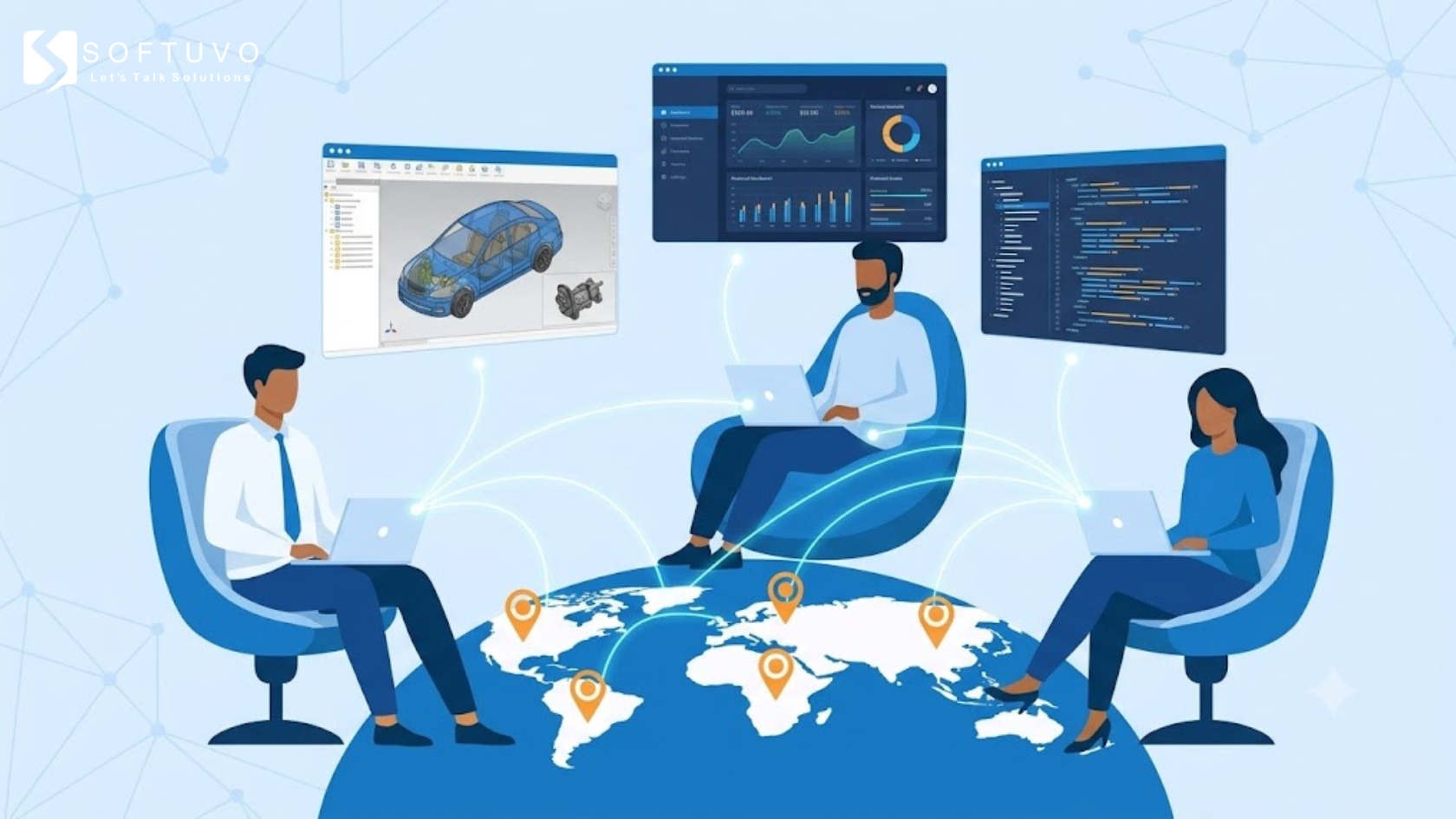
With video meetings, instant messaging, and project management tools, teams can stay connected throughout the day. Everyone knows what needs to be done, shares updates regularly, and works together to solve problems quickly.
As a result, offshore development has become much more collaborative. Instead of feeling like an outside service, your development team works closely with you and becomes part of your project.
Today, businesses across the US, UK, and international markets work seamlessly with distributed development teams. Their success doesn't come from everyone working in the same office, it comes from clear communication, shared goals, and a team that's committed to delivering the best results.
How to Outsource Software Development the Right Way
Outsourcing software development is more than hiring a team to write code. The right approach can help you save time, reduce risks, and build better software. Here are a few simple steps to get started.
Start with a Clear Vision
Before you choose a development company, know what you want to achieve. Have a clear idea of your business goals, key features, timeline, and budget. You don't need a detailed technical plan, but a clear direction helps your outsourcing partner understand your needs from the start.
Choose a Partner Who Understands Your Goals
Don't choose a partner based on price alone. Look for a team that understands your business, has relevant experience, and a proven track record. The right custom software development agency will focus on building a solution that supports your long-term growth.
Select the Right Development Approach
Every project is different, so choose a development model that fits your needs. A fixed-price model is ideal for projects with clear requirements, while a dedicated team offers more flexibility for ongoing development.
Make Communication a Priority
Good communication keeps your project moving smoothly. Regular updates, clear feedback, and transparent workflows help both teams stay aligned and solve issues before they grow.
Start with a Small Project
If you're working with a new outsourcing partner, begin with a small project. It's a simple way to evaluate their work quality, communication, and delivery process before building a long-term partnership.
When done right, Outsourcing Software Development is more than just a way to reduce costs. It gives you access to skilled talent, faster development, and a trusted technology partner that helps your business grow.
Pick the right engagement model
| Need | Softuvo page |
|---|---|
| Engineers inside your team | Staff augmentation |
| Longer-term Softuvo-run team | Offshore development (ODC) |
| A defined project outcome | Contact Softuvo |
| A specific skill | Hire developers |
The Future of Outsourcing Is Collaboration
As AI, cloud computing, automation, and cybersecurity continue to evolve, businesses need access to specialized expertise faster than ever.
That's why Outsourcing Software Development is becoming less about outsourcing work and more about building global innovation teams.
Companies that succeed won't necessarily have the biggest engineering departments.
They'll be the ones that collaborate with the right experts, embrace new technologies, and build partnerships that create long-term value.
At Softuvo, we help businesses turn their ideas into powerful digital solutions through smart collaboration, experienced development teams, and future-ready technology.
Ready to build your next software solution? Let's talk with Softuvo and create a technology roadmap that drives your business forward.
Frequently asked questions
What does outsourcing software development to India usually include?
It can mean project delivery, a dedicated team or ODC, or staff augmentation. Clarify scope, tools, and who sets the backlog before you sign.
How is staff augmentation different from project outsourcing?
Staff augmentation places Softuvo engineers into your process. Project outsourcing typically has Softuvo deliver against a defined outcome.
Is outsourcing to India only about cost?
Cost efficiency is one factor. Access to specialized skills, faster ramp-up, and flexible scale are equally common reasons — when governance is solid.
What risks should we plan for?
Communication gaps, unclear ownership, IP and security shortcuts, and scope drift. Engagements should include an MSA and SOW, access controls, and agreed communication routines.
How do we start with Softuvo?
Share your product goals, stack, and preferred model through the contact page. Softuvo will recommend staff augmentation, project delivery, or an ODC.
Why Businesses Choose Softuvo for Outsourcing Software Development
Finding the right technology partner can determine whether your software project becomes a growth engine or a costly challenge.
At Softuvo, we believe successful software development starts with understanding the business behind the idea. We don't just write code, we work as a technology partner to help businesses transform concepts into scalable, secure, and high-performing digital solutions.
With experience across modern technologies, our team helps startups and enterprises build solutions that are designed for real-world growth.
From initial planning to development, testing, deployment, and ongoing support, Softuvo provides end-to-end expertise through a flexible dedicated development team model.
Ready to Turn Your Software Idea Into Reality?
Your competitors are already using technology to improve customer experiences, automate processes, and scale faster.
The right development partner can help you move from idea to execution without the delays and challenges of building everything internally.
Partner with Softuvo to access experienced developers, flexible engagement models, and a reliable technology team focused on your success.
Have a software idea? Let's turn it into reality with Softuvo
Why Most Products Don't Look Right After Frontend Development (And How to Fix It)
Building a digital product is exciting. You invest time, money, and energy into getting it right from the first strategy call to the final design approval.
You finally approved the design. It looked great, clean, and professional, exactly what you wanted.
Then your development team said, "It's done."
You opened the product, and something felt off. The fonts looked slightly different. The spacing was uneven. On mobile, the layout was inconsistent. It didn't feel like the design you signed off on weeks ago.
If this sounds familiar, you are not alone. This is one of the most common frustrations that business owners, founders, and product managers face after investing in a product build. And the good news is, it's rarely anyone's fault. It's a process problem, not a people problem.
In this blog, we'll break down exactly why this happens during front-end development and, more importantly, what you can do to make sure it never happens to your product again.
What Actually Happens Between Design and Front-End Development
Here's something most clients are never told upfront:
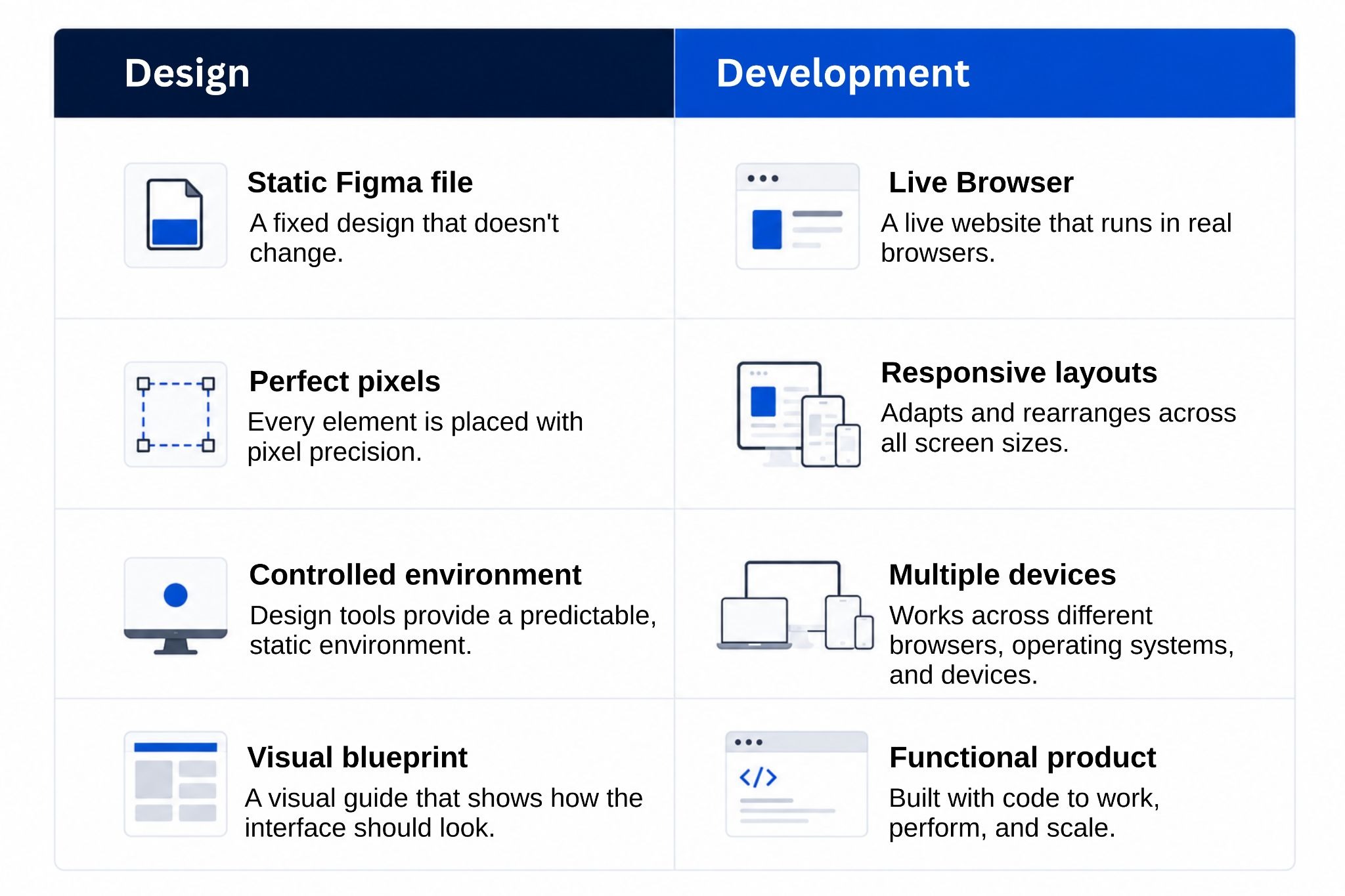
Designers and developers work in two completely different worlds.
Think of it like an architect's blueprint vs the actual building. The blueprint shows how it should look. But construction with real materials, real conditions, and real constraints always introduces small differences.
Those small differences are what you notice when your product doesn't look right.
The Figma mockups your team approved are a vision. Turning that vision into a tangible product requires a deliberate and well-managed process. Without it, things drift, and that drift shows up in the final product.
The Top Reasons Most Products Don't Look Right After Front-End Development
Let's go through the most common causes:
1. Nobody Agreed on a Design System Before Development Started
A design system is basically a rulebook. It defines things like:
Which fonts to use and at what sizes
What the exact brand colors are
How much space goes between elements
What buttons, icons, and cards should look like
When there's no design system agreed upon before front-end development begins, developers have to make these decisions on their own, screen by screen, page by page. And they make slightly different choices each time.
What you end up seeing: Button styles that look slightly different on different pages. Inconsistent font sizes. Spacing that feels "off" in some sections and fine in others.
Real-world example: Airbnb built their Design Language System (DLS) to solve exactly this problem. After implementing it, they saw a 35% reduction in design-to-development handoff time and significantly fewer design inconsistencies across their product. (Source: UXPin, Grokipedia)
2. Figma Mockups Were Shared as Images, Not Proper Specs
This is one of the most common mistakes in the entire design-to-development process.
When a designer finishes a screen in Figma, they sometimes export it as an image and hand it to the developer. The developer then has to look at that image and guess:

How many pixels is this margin?
What font size is this heading?
What color exactly is this button?
What should this look like when someone hovers over it?
Visily's research on design handoffs directly confirms this: developers are forced to interpret rather than implement when specs aren't provided, leading to layouts that look close but feel consistently "off."
What you end up seeing: A product that resembles your design but feels slightly wrong everywhere.
Proper Figma mockups should include annotations, measurements, font details, color codes, and interaction states, not just a screenshot to copy.
3. Responsive Web Development Was Never Planned in the Design Phase
Here's a stat worth knowing: mobile devices now account for 64.35% of all global website traffic as of mid-2025. (Source: StatCounter / Quantumrun)
That's more than 6 out of 10 visitors coming from a phone.
Yet in many projects, the design is only created for desktop, and nobody defines how it should behave on smaller screens. The developer is left to figure it out alone.
What you end up seeing:
The layout looks great on desktop, but is broken on mobile
Buttons are too small to tap
Text that overflows or gets cut off
Images that don't resize properly
Responsive web development should never be an afterthought. It needs to be planned from the very start, for every screen size.
4. UI Development Happened in Isolation With No Check-Ins Along the Way
Many projects follow the same pattern:
Design is finalized
Design is handed off to developers
Nobody looks at it again until development is "done"
It looks completely different from what was approved
When UI development happens in isolation, without regular check-ins between design and development, small misinterpretations compound over time. A tiny spacing mistake on screen one becomes a bigger inconsistency across twenty screens.
Once communication drops below a certain threshold, assumptions multiply. And assumptions compound faster than bugs. By the time inconsistencies are visible, they're embedded across multiple pages and components.
What you end up seeing: A final product that looks like it went in a completely different direction from the original design, even though everyone was technically "doing their job."
5. The Development Team Had Great Coding Skills But Weak Design Sensitivity
This one is uncomfortable to say, but it's real.
Not every developer has a strong eye for design. They can write clean, functional code, but still deliver something that looks slightly off because pixel-level details weren't prioritized.
The kinds of things that slip through:
Line height that's too tight, making text feel cramped
Images that aren't quite aligned
Shadows or borders slightly off from the design
Hover states that feel jarring instead of smooth
Everything technically works. But it doesn't look right.
This is why the best front-end development teams aren't just great coders; they genuinely care about how the final product looks and feels, not just how it functions.
What This Costs Your Business
This isn't just a visual problem. It has real business consequences.
Delayed launches: Rework cycles push your go-live date back by weeks or even months
Budget overruns: Fixing issues after development is far more expensive than catching them early.
Lost user trust: First impressions matter. A product that looks unpolished signals an untrustworthy brand, no matter how good your service actually is.
Missed market opportunities: While you're spending weeks fixing visual issues, competitors are launching and capturing your potential customers.
How to Fix It, Before It Costs You More
The good news: every single cause above is completely preventable. Here's what needs to change.
1. Lock a design system before development starts
Agree on fonts, brand colors (with hex codes), spacing rules, and component styles (buttons, inputs, cards, and icons) up front. This becomes the single source of truth, so developers aren't making style calls screen by screen.
2. Hand off specs, not screenshots
Figma files should include exact measurements, font details, color codes, asset exports, and all interactive states (hover, click, disabled, and error); a full instruction manual, not a picture to copy from.
3. Design for mobile, tablet, and desktop from day one
Responsive behavior, what resizes, what hides, and what shifts should be a design decision, not something a developer improvises after the fact. With mobile now driving 64.35% of global website traffic, this can't be an afterthought.
4. Review at 30%, 60%, and 90% of development
A spacing error caught at 30% takes minutes to fix; the same error caught at 100% can mean days of rework. Regular check-ins keep small drifts from compounding into a final product that looks nothing like what was approved.
5. Choose a team where design and development sit together, not in silos
This is the fix that makes the other four actually stick. When designers and developers work side by side, flagging issues during the build, not after, what you approve is what your users see. At Softuvo, that's exactly how our teams work: no gap, no drift, no surprises at launch.
What to Look for in a Front-End Development Partner
Before signing with any agency or development team, ask them these questions:
Do you have an in-house design team that works alongside your developers?
What does your design-to-development handoff process look like?
How do you handle responsive web development? Is it designed upfront or done after?
At what stages can I review the product during development?
Can you show me examples where the final product closely matched the original design?
The right team won't hesitate to answer any of these. If they can't explain their process clearly, that's your answer.
Final Thoughts
The gap between what your product looks like in a design file and what it actually looks like after front-end development is real, but it is entirely preventable.
It doesn't require a bigger budget. It doesn't require starting over. It requires a better process, one that connects design and development from day one, not just at the handoff.
The right partner won't just build what you ask for. They'll make sure what you asked for in the first place is exactly what gets delivered.
Ready to build a product that actually looks the way you designed it?
At Softuvo, our design and front-end development teams work together from strategy to launch, so your product looks as good in the browser as it does in the mockup.

Explore Our Healthcare Solutions
For organizations looking to transform care delivery, Softuvo builds modern healthcare systems, secure cloud architectures, scalable platforms, and compliance-first engineering.
View Healthcare Solutions