How Application Modernization Can Upgrade Your Mobile App Without Losing Users
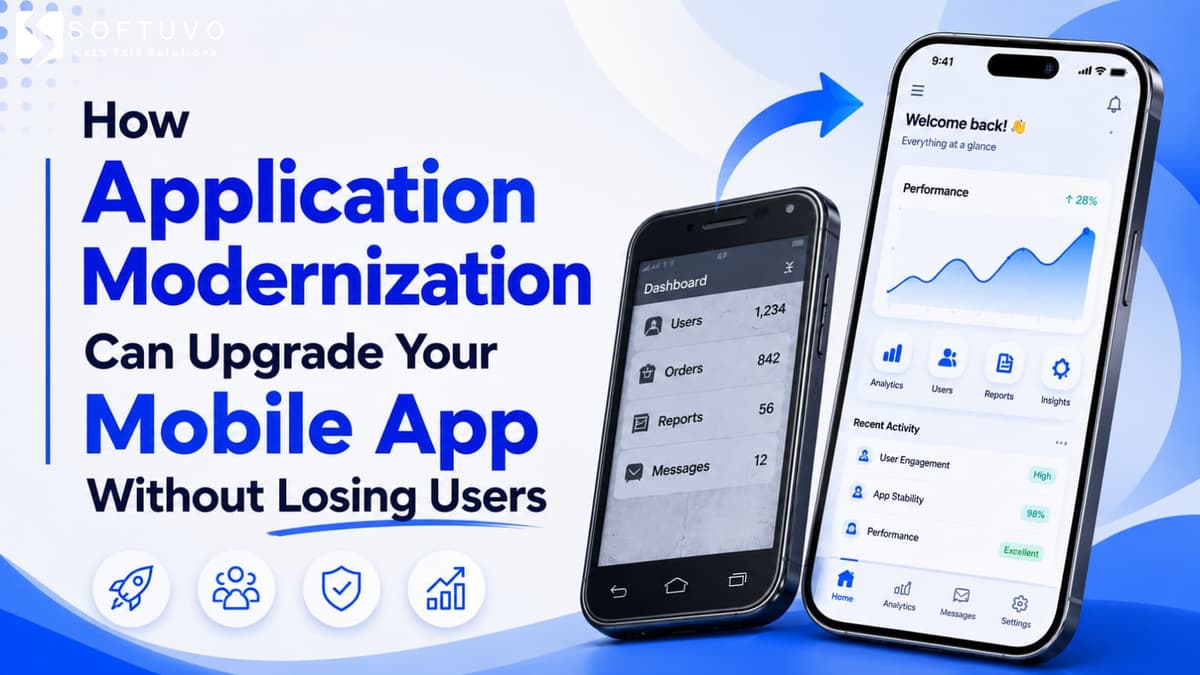
Every mobile app reaches a turning point where its underlying technology begins to slow down growth. Slow load times, unexpected crashes, outdated interfaces, or an inability to support new iOS and Android features point to one core issue: your app is suffering under the weight of outdated infrastructure.
However, rebuilding an app from scratch carries a major risk, losing the loyal user base you worked so hard to build. Radical redesigns or broken feature pathways often lead to frustration, bad reviews, and high churn rates.
Executing effective application modernization allows you to upgrade performance, security, and scalability while keeping your existing users engaged.
The Silent Cost of Ignoring Mobile App Modernization
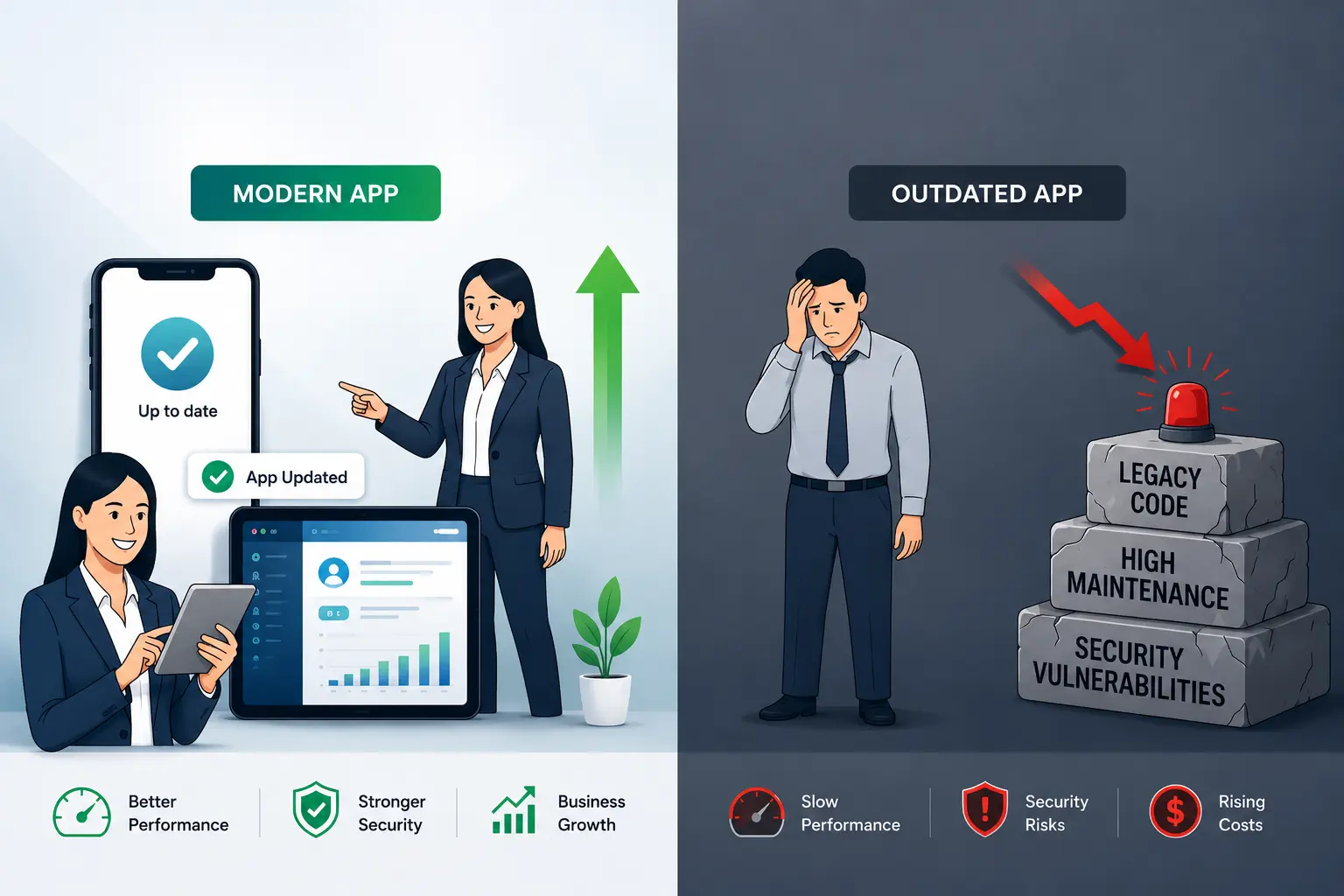
Holding onto legacy mobile systems costs far more than the budget required to update them. When relying on legacy application modernization strategies late in the game, businesses often face:
High Churn Rates: 88% of users are less likely to return to an app after a single bad experience.
Escalating Maintenance Costs: Fixing bugs on legacy codebases takes 3x more developer time than building on modern frameworks.
Security Vulnerabilities: Outdated APIs and deprecated dependencies leave your mobile app vulnerable to data breaches.
Feature Stagnation: Integrating modern technologies like AI, biometrics, or real-time payment gateways becomes nearly impossible on older architectures.
Key Strategies for Seamless Mobile Application Modernization
Updating your codebase doesn't mean disrupting the end-user experience. A strategic roadmap balances backend improvements with zero-downtime deployment.
1. Shift from Monolith to Microservices
If your app runs on a monolithic architecture, a single bug can crash the entire platform. Transitioning to microservices isolates app functions into independent modules. This means you can update the payment module or notification system without risking the entire user experience.
2. Implement Incremental Updates (The Strangler Fig Pattern)
Instead of taking the app offline for a complete overhaul, modernize it component by component. Swap out legacy APIs for modern GraphQL or RESTful services in the background while keeping the user interface familiar.
3. Optimize the UI/UX Micro-Interactions
When updating the user interface, avoid drastic shifts that break user habits. Retain familiar navigation paths while improving readability, reducing tap targets, and smoothing out transitions for a faster feel.
4. Cloud Migration & Backend Optimization
Migrating your backend to cloud-native platforms improves server response times and app stability during traffic spikes. Modern cloud infrastructure ensures your app responds instantaneously, directly boosting user retention.
How to Upgrade Without Losing Users
To maintain app store ratings and user loyalty during a major transition, follow these execution principles:
Maintain Data Continuity: Ensure user sessions, saved preferences, purchase histories, and settings migrate seamlessly without requiring forced re-logins.
Run Beta Testing Programs: Release updates to a small segment of power users first to gather real-world feedback and squash bugs early.
Communicate Transparently: Use subtle, in-app micro-copy to guide users through subtle visual changes or feature enhancements.
Upgrade Your Mobile Application with Softuvo
Executing a modern application strategy requires technical precision, strategic foresight, and continuous execution.
At Softuvo, we specialize in comprehensive application modernization services designed to revamp legacy apps into scalable, future-ready mobile solutions. Our engineering team handles everything from re-architecting complex backends to refining front-end user interfaces, ensuring high performance without impacting day-to-day business operations.
Whether you need to transition to a cloud-native architecture, improve app response times, or integrate modern cross-platform frameworks, Softuvo provides the technical foundation your application needs to thrive.
Ready to modernize your app without risking your active user base?
Partner with Softuvo to audit your current architecture and build a zero-disruption modernization roadmap tailored to your growth goals.
Web & app modernization
Modernize the app without losing the users who depend on it
We re-platform and refactor legacy web and mobile apps in stages, keeping the product live and the data intact throughout.
Prefer email? Write to [email protected] or use the contact form.