Logistics Data Integration: How to Bridge ERP, TMS, and WMS for Zero Bottlenecks
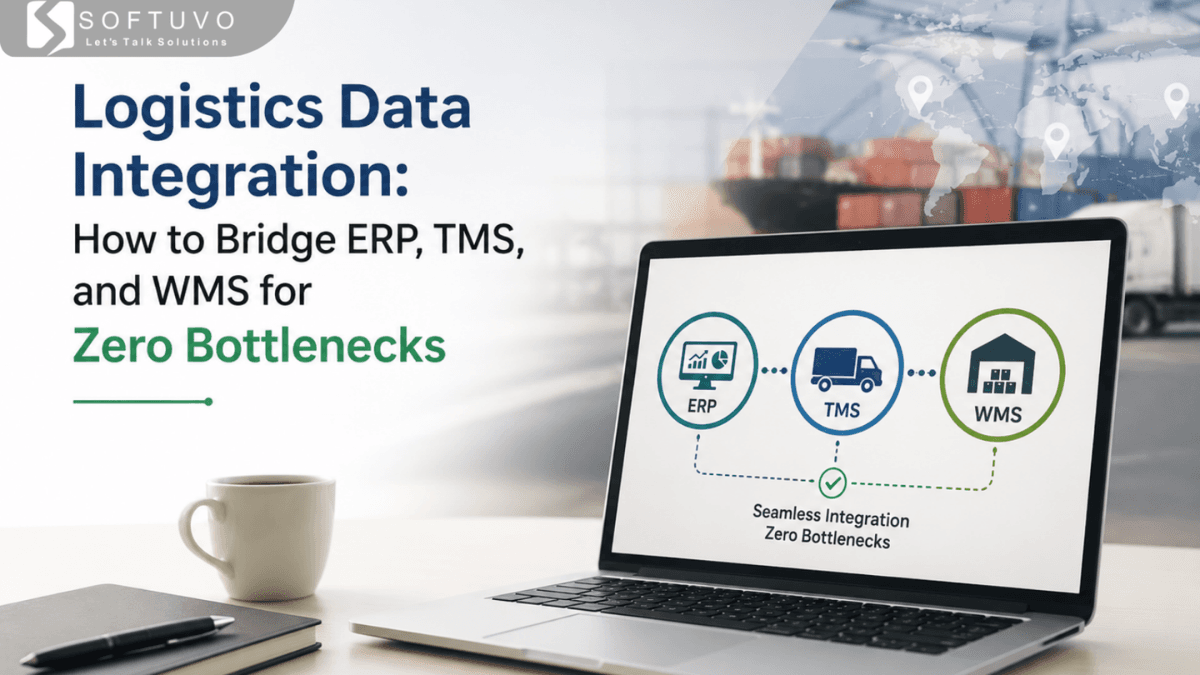
How much revenue is your enterprise losing to the silent blackouts hiding between your ERP, TMS, and WMS?
In modern supply chain operations, speed, visibility, and accuracy determine market leadership. Yet, many enterprises struggle with fragmented software ecosystems where core applications operate in isolated silos. When your Enterprise Resource Planning (ERP), Transportation Management System (TMS), and Warehouse Management System (WMS) cannot communicate instantly, critical visibility blackouts develop across your entire supply chain network.
Achieving end-to-end logistics data integration is no longer a luxury, it is an operational necessity. Bridging your core platforms through custom logistics system integration eliminates manual data entry, prevents costly fulfillment delays, and creates a unified operational control tower.
The Core Challenge: Disconnected Supply Chain Architectures
Each platform in your logistics ecosystem handles a distinct, vital operational domain:
ERP (Enterprise Resource Planning): Manages financial ledgers, purchase orders, customer accounts, and high-level inventory balances.
TMS (Transportation Management System): Handles carrier selection, route optimization, freight auditing, and vehicle tracking.
WMS (Warehouse Management System): Controls inbound receiving, inventory picking, packing, bin allocation, and dock management.
When these platforms lack robust supply chain data integration, operational friction quickly escalates. A sales order generated in the ERP requires manual transcription into the WMS for picking. Meanwhile, logistics managers must re-enter shipment details into the TMS to secure carrier capacity.
Operational Pain Point | Impact on Supply Chain Performance |
Manual Data Entry Errors | Inaccurate SKUs, wrong delivery addresses, and shipping delays. |
Inventory Invisibility | Phantom stockouts or overstocking due to delayed sync between warehouse picks and ERP accounting. |
Delayed Carrier Dispatching | Extended dock dwell times, higher detention fees, and lower customer satisfaction. |
High Labor Overhead | Operational teams waste valuable hours reconciling discrepancies across disparate spreadsheets. |
The Solution: Real-Time ERP, TMS, and WMS Integration
Implementing complete ERP TMS WMS integration establishes an automated data highway where information flows bi-directionally across systems without human intervention.

How Modern Logistics Data Management Functions
Order Processing: A customer order triggers in your ERP. Advanced logistics software integration immediately routes order details to the WMS for picking and to the TMS for freight planning.
Warehouse Execution: The WMS assigns pick lists to operators. As items are scanned and packed, inventory counts instantly reflect across both the ERP and WMS.
Automated Carrier Dispatch: The TMS evaluates real-time rates, selects optimal shipping lanes, and issues digital dispatch instructions without manual phone calls or emails.
Final Fulfillment & Tracking: Upon delivery confirmation, tracking status updates automatically in the ERP, initiating billing cycles and sending proactive notifications to the end customer.
This synchronized ecosystem ensures every department operates from a single source of truth, establishing an agile framework for scalable logistics data management.
5 Key Benefits of Unifying Your Logistics Systems
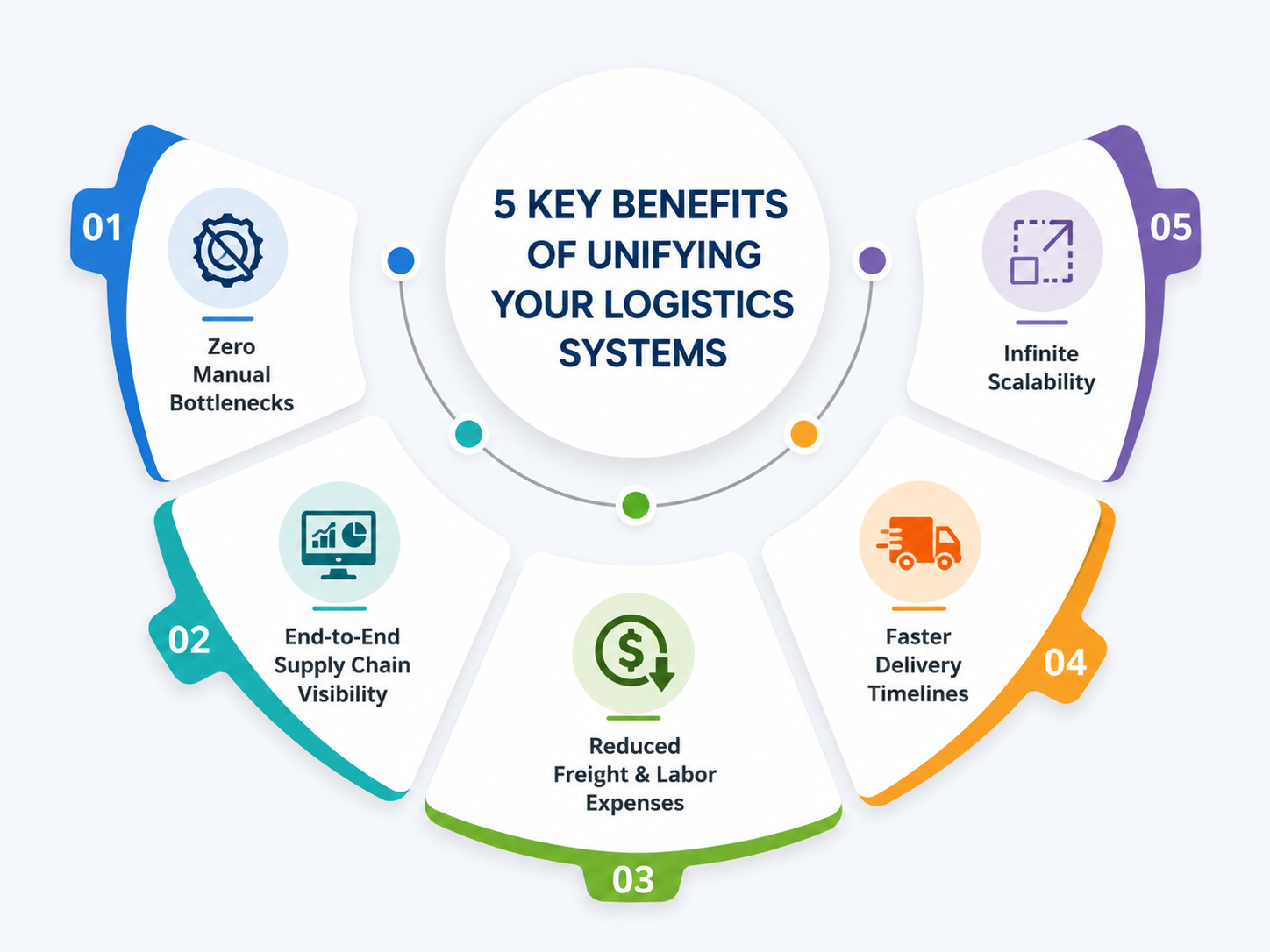
Connecting your operational software through bespoke digital bridges transforms how your business executes daily workflows:
1. Zero Manual Bottlenecks
Automating data transfer across ERP, TMS, and WMS platforms eliminates data transcription errors, accelerates order-to-cash cycles, and prevents costly shipping mistakes.
2. End-to-End Supply Chain Visibility
A centralized control tower provides real-time status updates across all inventory, pending shipments, and active fleet locations from a single dashboard.
3. Reduced Freight & Labor Expenses
Optimized route dispatching combined with automated warehouse pick scheduling drastically cuts fuel burn, dock dwell times, and overtime labor costs.
4. Faster Delivery Timelines
Eliminating idle wait times between warehouse packaging and carrier pickup leads to faster transit times and higher on-time, in-full (OTIF) fulfillment rates.
5. Infinite Scalability
Unified software architecture makes scaling operational volume effortless. Adding new warehouses, introducing IoT fleet tracking, or onboarding new carriers becomes a simple configuration task rather than a technical overhaul.
Bridge Your Systems with Softuvo
Overcoming supply chain bottlenecks requires more than off-the-shelf software, it demands a strategic technology partner who understands complex operational engineering.
At Softuvo, we specialize in custom logistics data integration and supply chain digital transformation. Whether you need custom API bridges connecting SAP or Oracle to specialized WMS/TMS tools, automated freight workflow platforms, or real-time IoT fleet tracking hubs, our team builds scalable digital architectures tailored to your operational needs.
Bespoke Middleware & APIs: Connect legacy and modern platforms with zero data loss.
Predictive Fleet & Dispatch Analytics: Turn raw operational data into actionable margin-saving insights.
Custom Control Towers: Gain full visibility across vehicles, drivers, and warehouse inventory in one real-time dashboard.
Stop Letting Disconnected Systems Drain Your Profits
Eliminate internal blind spots, reduce operational overhead, and transform your supply chain into a competitive advantage.
Schedule a Call with Softuvo’s Logistics Tech Experts Today — Let's build a unified, automated logistics platform engineered for your business growth
Have questions or are ready to discuss your integration needs? Reach out directly to our team at [email protected].
Logistics software
Custom logistics software built around your operation
We connect ERP, TMS and WMS data, build the dashboards your dispatch team actually uses, and automate the hand-offs in between.
Prefer email? Write to [email protected] or use the contact form.