Custom Web Design: Key Features Every Business Website Should Have
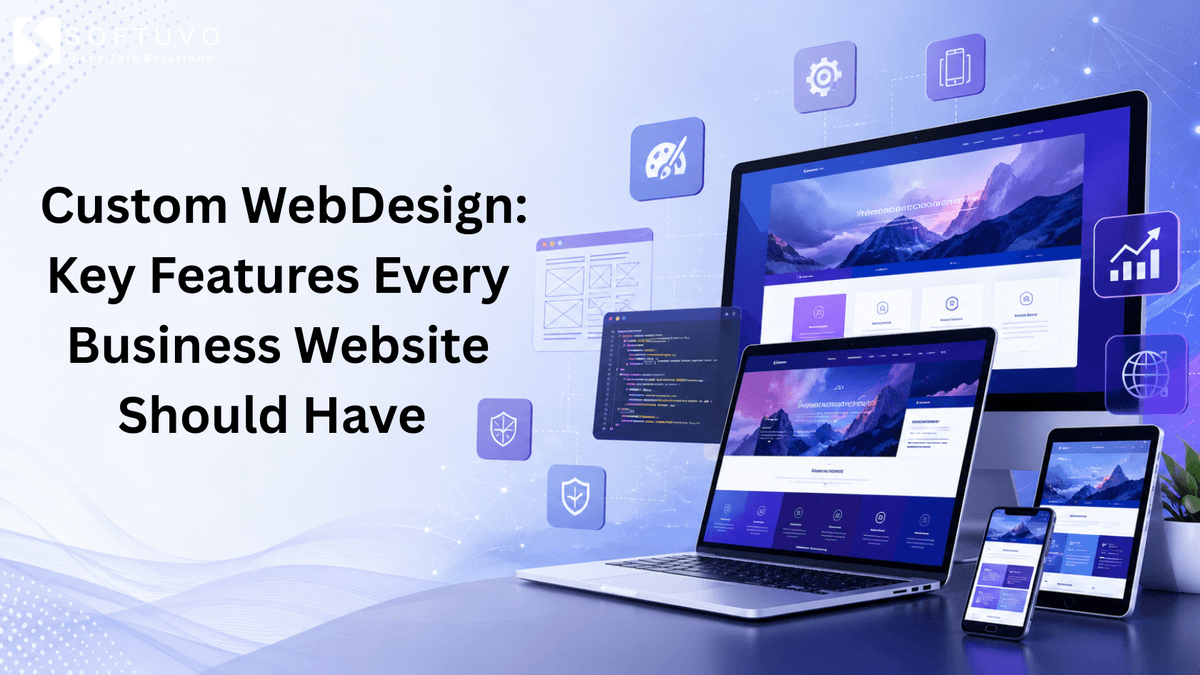
A business website can look polished and still fail to do its job.
Maybe the pages are attractive, but visitors cannot quickly understand what the company offers. Perhaps the website works well on a laptop but feels frustrating on mobile. Or the site gets traffic from search engines, yet very few visitors turn into enquiries.
These problems usually have less to do with choosing the right colours or adding more visual effects and more to do with how the website has been planned, designed, and developed.
This is precisely the gap custom web design fills. Instead of forcing a business into a pre-built layout, a custom website can be structured around its audience, services, brand identity, customer journey, and growth plans.
But what should a business actually look for when investing in a custom website?
1. The Design Should Start With the Business, Not a Template
One of the biggest limitations of template-based websites is that the business often has to adapt to the design.
With custom web design, the process can work in the opposite direction.
The website structure starts with questions such as:
Who is the website trying to reach?
What does the visitor need to know first?
Which services or products matter most?
What action should a visitor take?
What makes the company different from competitors?
Which pages are likely to bring organic search traffic?
The answers influence everything from page hierarchy to navigation and content placement.
For example, a B2B technology company may need detailed service pages, case studies, technical resources, and lead forms. A local service provider may need location pages, testimonials, service information, and easy enquiry options.
A custom website gives both businesses room to build those experiences around their actual customers.
2. Navigation Should Reflect How Customers Search
Visitors rarely arrive at a website thinking about its navigation structure. They arrive with a question or a problem.
They may want to know:
“Can this company solve my problem?”
“How much does the service cost?”
“Can I trust this business?”
“How do I get started?”
A good website should help them find those answers without making them dig through five different pages.
This is why navigation is an important part of custom web design. Instead of filling a menu with every possible page, businesses can prioritise the paths that matter most to their customers.
Clear service categories, descriptive page names, logical internal links, and well-placed calls to action can turn a confusing website journey into a straightforward one.
3. Responsive Web Design Should Be Built Into the Experience
Mobile responsiveness is not simply about shrinking a desktop website until it fits a phone screen.
A genuinely effective responsive web design approach considers how people interact with a website on different devices.
A large desktop navigation menu may need to become a simple mobile menu. A multi-column service section may need to become a vertical layout. Buttons need enough space to tap comfortably, while forms should remain easy to complete without excessive scrolling.
This matters because a visitor who struggles to navigate a website on mobile is unlikely to stay around just because the desktop version looks impressive.
The design should adapt to the user, not expect the user to adapt to the design.
4. SEO Should Influence Design From the Beginning
SEO is often treated as something that happens after a website has been designed.
That can create unnecessary problems.
A beautiful website may still struggle to perform organically if its structure is difficult for search engines to understand or important pages are buried too deeply.
SEO-friendly web design brings search visibility into the planning stage.
That includes creating logical page structures, using meaningful headings, developing crawlable navigation, planning internal links, optimising images, maintaining mobile usability, and giving important services or topics their own useful pages.
It also means thinking about search intent.
If people are searching for “custom web design services,” for example, a business should have a page that clearly addresses that need instead of expecting a generic homepage to rank for every relevant search.
Good SEO and good UX often work towards the same goal: helping people find the right information quickly.
5. The Website Should Make the Next Step Obvious
Not every visitor is ready to buy immediately.
One person may want to request a quote. Another may want to speak to a specialist. Someone else may still be researching solutions.
A strong website recognises these different stages and provides suitable next steps.
A service page might invite users to Request a Consultation. A detailed guide could encourage them to Talk to an Expert. A product page could use Get Started or Request a Demo.
The CTA should match the visitor's intent.
This is more effective than placing “Contact Us” everywhere and expecting visitors to figure out why they should click it.
6. Custom Web Development Should Support Real Business Requirements
Design gets visitors' attention, but functionality determines what they can actually do.
This is where custom web development becomes important.
Businesses may need functionality that cannot be handled effectively through a standard template. Depending on the project, this could include:
Custom enquiry and lead forms
Booking or appointment systems
Customer dashboards
Third-party API integrations
Payment functionality
Product configurators
Business calculators
CRM integrations
Custom content management features
Membership or customer portals
The purpose isn't to add technology simply because it sounds impressive.
The better question is: What functionality would remove friction for customers or make the business more efficient?
That approach keeps development focused on measurable business value.
7. Speed Should Never Be Sacrificed for Appearance
There is a point where visual design can start working against the website.
Heavy animations, oversized media files, unnecessary scripts, and poorly optimised elements can make pages slower. A visitor does not necessarily care how technically impressive a website is if they are waiting for it to load.
Performance should therefore be considered during design and development rather than treated as a final technical check.
Optimised images, efficient code, sensible animations, appropriate hosting, caching, and careful third-party integrations can all contribute to a faster experience.
The best website design is often the one that feels effortless to use.
8. Content and Design Need to Work Together
A common mistake is designing every page first and trying to squeeze content into the finished layout.
That can result in awkward headings, excessive scrolling, weak CTAs, or important information being pushed too far down the page.
Content should influence the layout.
A service page may need to explain the problem, introduce the solution, demonstrate expertise, answer objections, and provide a clear next step. A product page may need specifications, benefits, comparisons, reviews, FAQs, and purchase information.
The design should make this information easier to consume.
This is one reason experienced custom web design services look beyond aesthetics. The goal is to create a relationship between content, structure, design, and user behaviour.
9. The Website Should Be Easy to Expand
A business website is rarely finished forever.
Companies launch new services, enter new markets, publish content, add integrations, create campaigns, and change their positioning.
A website that was designed only for today's requirements can become restrictive surprisingly quickly.
Custom design and development can provide a stronger foundation for future changes. New landing pages, service sections, integrations, resources, and functionality can be added without completely rebuilding the website.
This makes scalability an important consideration when choosing a web design approach.
10. Your Website Should Have a Clear Conversion Path
Traffic alone does not make a website successful.
Imagine a visitor arrives through Google after searching for a specific service. They land on the correct page, understand the offering, see evidence that the business is credible, and know exactly what to do next.
That is a conversion path.
A strategically designed website can guide visitors through this journey:
Search → Relevant page → Clear information → Trust signals → Strong CTA → Enquiry
Every stage matters.
Testimonials, case studies, client logos, useful FAQs, clear service explanations, and transparent contact options can help remove hesitation before the visitor reaches the CTA.
This is where custom web design can move beyond visual branding and become part of a broader growth strategy.
Why Businesses Choose Softuvo for Custom Web Design
Building a business website should not be about selecting a template, replacing the text, and publishing it as quickly as possible.
At Softuvo, the focus is on creating digital experiences around the needs of the business and its users. Its custom web design approach can bring together visual design, responsive experiences, functionality, usability, and business objectives rather than treating each part as a separate task.
Whether a company needs a new website, wants to modernise an outdated digital presence, or requires a more tailored web solution, the right approach starts with understanding what the website needs to accomplish.
That means considering the audience, business goals, content structure, functionality, search visibility, and conversion journey before deciding what the final website should look like.
Is Your Website Helping Your Business or Holding It Back?
A dated look, confusing navigation, poor mobile performance, or traffic without enquiries, a new colour palette won't fix that. It's time to rethink the experience from the ground up.
Custom web design turns your website into more than a brochure, a platform that builds your brand, supports SEO, and drives growth.
Ready to build a website around your business, not the other way around? Talk to Softuvo today.