How Can App Store Optimization Take Your App from Invisible to Top Ranked?
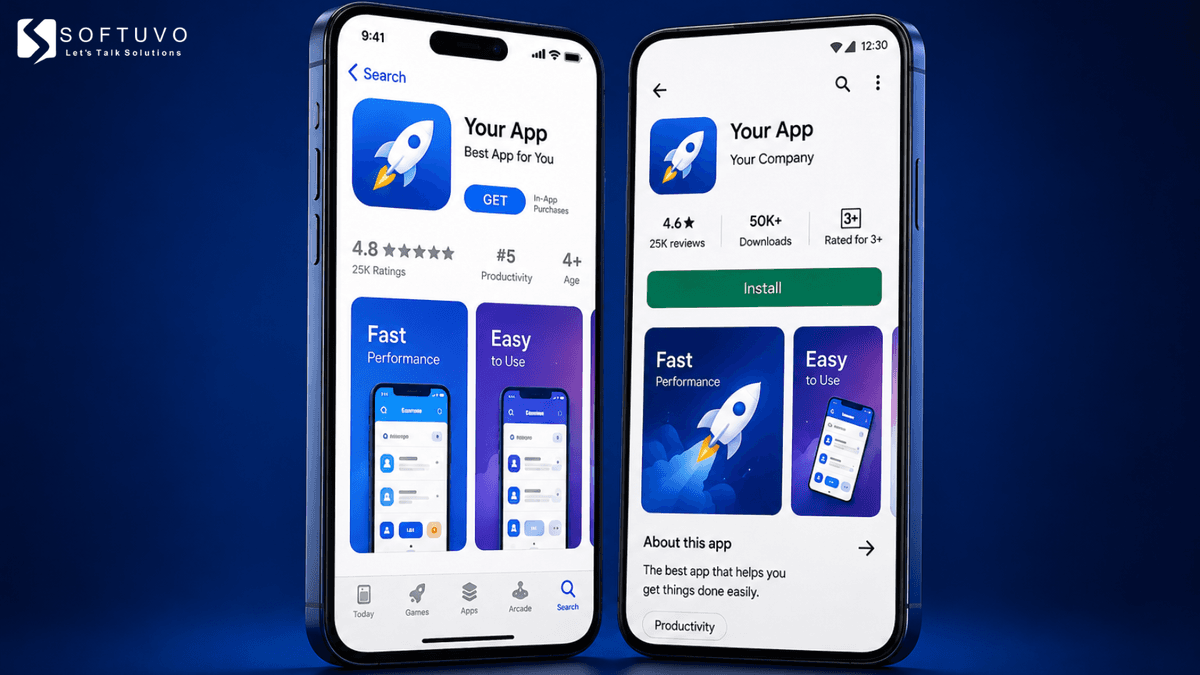
What if your app is great, but no one can find it?
You spent months building your mobile app. The design looks great, the features work perfectly, and it genuinely solves a problem for your users. You hit "publish" expecting downloads to grow, but instead, they barely move.
Sound familiar?
This is one of the biggest challenges app owners face. It's not that the app isn't good, it's that people simply don't see it. With millions of apps competing for attention in the App Store and Google Play, even high-quality apps can disappear in the crowd without the right visibility.
With over 5 million apps available, getting noticed is a challenge. App Store Optimization (ASO) helps improve your app's visibility and increase organic downloads.
If your goal is long-term success, ASO deserves as much attention as app development itself.
Why Great Apps Still Fail to Get Downloads
Your app could be better than your competitors, and still get fewer downloads. The reason is simple: if users can't find your app, they can't install it. Most people choose apps that appear at the top of search results, making App Store Optimization (ASO) essential for improving visibility and organic downloads.
Common reasons apps miss out on downloads include:
Using the wrong keywords
Weak app title and description
Poor screenshots and app visuals
Low ratings and few reviews
Low conversion rates
Ignoring app store algorithm updates
No clear ASO strategy
Without proper App Store Optimization, even a great app can stay hidden while competitors gain more visibility and installs.
Why App Store Optimization Matters in 2026
Getting your app published is easy, getting it discovered is the real challenge. With millions of apps competing for attention, simply launching your app isn't enough.
Visibility: Your app appears for relevant searches on the Apple App Store and Google Play.
Conversion: More visitors who see your listing actually install, thanks to clearer value, stronger visuals, and trust signals
In practice, effective ASO can lift organic installs by 20–40% on average, with some case studies reporting 2×–3× growth after targeted keyword and creative overhauls.
Breaking Down the Ranking Engine: How Optimization Actually Works
Taking an app to top-ranked status requires a dual focus: optimizing metadata for algorithmic indexing and refining creative assets for human conversion.
1. Intent-Driven Keyword Mapping
Store algorithms analyze your title, subtitle, and keyword metadata to understand what your app does. Mapping high-intent search terms into these high-weight zones signals relevance directly to store crawlers.
2. Algorithmic Nuances Across Stores
App Store SEO: Focuses heavily on the title, subtitle, and hidden 100-character keyword field. Exact match relevance and download velocity dictate rank movement.
Google Play Store Optimization: Google utilizes natural language processing (NLP). Keywords must flow naturally throughout your short and long descriptions while benefiting from web-based domain authority and backlinks.
3. Conversion-Focused Creative Testing
App Store Optimization doesn't stop at visibility. If thousands of users view your product page but walk away without installing, your rankings drop. High-performing visual assets, such as localized screenshots, preview videos, and bold app icons, ensure high view-to-install conversion rates.
Mobile App Optimization Starts Before the Install
The first impression of your app happens before anyone downloads it. That's why mobile app optimization starts with your app store listing, not after installation.
Ask yourself:
Does your app icon clearly represent your brand?
Do your screenshots show the value of your app, not just its features?
Does your description explain how your app solves a problem?
Is your value clear within the first few seconds?
Most users decide whether to install an app within moments of viewing its listing. A well-optimized app page can improve conversion rates and increase downloads without spending more on ads.
The ASO Framework: From Invisible to Top Ranked
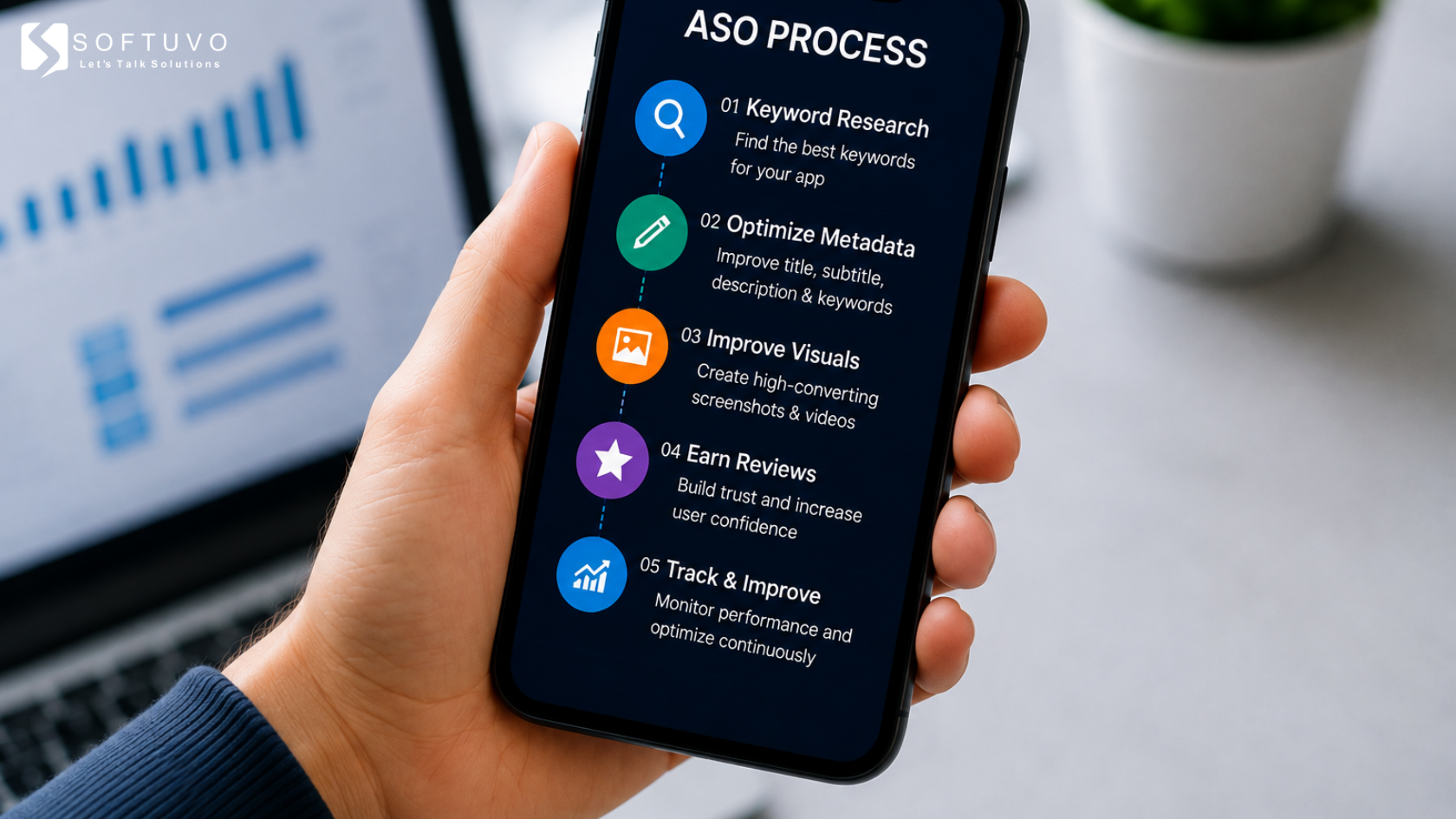
Use this step-by-step framework to structure your App Store Optimization efforts.
1) Keyword Research: The Foundation
Start with a broad list of relevant terms, then narrow down using:
Search volume and trend data
Competition level (how many strong apps rank)
Relevance to your core value proposition.
Aim for a mix of:
Head terms: Higher volume, higher competition (e.g., “fitness tracker”)
Long-tail terms: Lower volume but higher intent and easier to rank (e.g., “home workout plan for beginners”).
Tools and approaches commonly used by ASO Services include competitive gap analysis, keyword difficulty scoring, and localization research for top markets.latestfromtechguy+1
2) On‑Store Metadata Optimization
Map your chosen keywords into store fields strategically.
iOS (App Store SEO):
App Name: Include primary keyword and brand if possible.
Subtitle: Reinforce the main benefit and secondary keywords.
Keyword Field: Fill all 100 characters; avoid duplicates and stopwords.
Description: Focus on benefits, use cases, and social proof; weave keywords naturally.
Google Play:
Title: Pack the most important keyword early.
Short Description: Summarize value with 1–2 key terms.
Long Description: Use keyword-rich paragraphs and bullet points that read naturally.
Refresh metadata every 4–6 weeks or with major feature releases to stay aligned with search trends.
3) Creative Assets That Convert
Visibility gets impressions; creatives get installs.
Icon:
Simple, high-contrast, recognizable at small sizes.
Test against competitors’ color palettes and shapes.
Screenshots:
First 2 screenshots should front-load the core benefit.applaunchflow+1
Use benefit-driven captions with keywords (OCR on iOS can read text in images).latestfromtechguy+1
Keep captions under ~7 words and readable on small screens.
Preview Video:
Apps with preview videos can see up to 35% higher conversions
Show the problem → solution → outcome in the first 5–10 seconds.
Run A/B tests (Product Page Optimization on iOS, Store Listing Experiments on Google Play) to systematically improve CTR and conversion.applaunchflow+1
4) Ratings, Reviews, and Trust Signals
Reviews influence both conversion and rankings.
Prompt satisfied users for ratings at meaningful moments (after a win, not during friction)
Respond to reviews promptly and professionally to show active support.
Highlight social proof in screenshots or description (“Trusted by 500K+ users,” “4.7★ rated”)..
Consistent positive signals help sustain higher positions for your target keywords.
5) Localization for Global Organic Growth
Top ASO Services rarely stop at English. Localize for your biggest markets:
Translate and culturally adapt titles, subtitles, and descriptions.latestfromtechguy+1
Redesign screenshots with local language and context.applaunchflow+1
Research region-specific keywords rather than direct translations.
Case studies show significant gains: one app saw 58% more search downloads in Taiwan and 47% growth on Google Play in the US after localized ASO.
6) Continuous Measurement and Iteration
ASO is not a one-time task. Track:
Impressions, CTR, and conversion rate per store and per country.
Keyword rankings for core and long-tail terms.
Impact of each A/B test on installs and retention.applaunchflow+1
Data-driven iteration beats intuition; small, frequent updates compound into large gains in organic app downloads.
The Softuvo Approach: Turn App Store Visibility into Revenue Growth
Optimizing an app isn't a one-off task, it's an evolving science of keyword iteration, visual A/B testing, and technical performance tuning. That's where Softuvo delivers measurable impact.
As a trusted digital partner, Softuvo Solutions combines data-backed search strategies with high-converting creative execution. Instead of guessing what algorithms want, our specialized team conducts deep competitive analysis, audience research, and algorithmic indexing tests to position your app at the top of high-value search queries.
From complete metadata overhauls to ongoing store listing experiments, our tailored ASO Services ensure your application doesn't just rank,it converts casual searchers into loyal, active users.
Stop Letting Competitors Steal Your Organic Traffic
Your app deserves more than a place in the store, it deserves to be discovered by the people actively searching for it.
Ready to Turn More Searches Into Downloads?
Partner with Softuvo Solutions Today. Let’s turn your mobile app into a top-ranked, revenue-generating product.